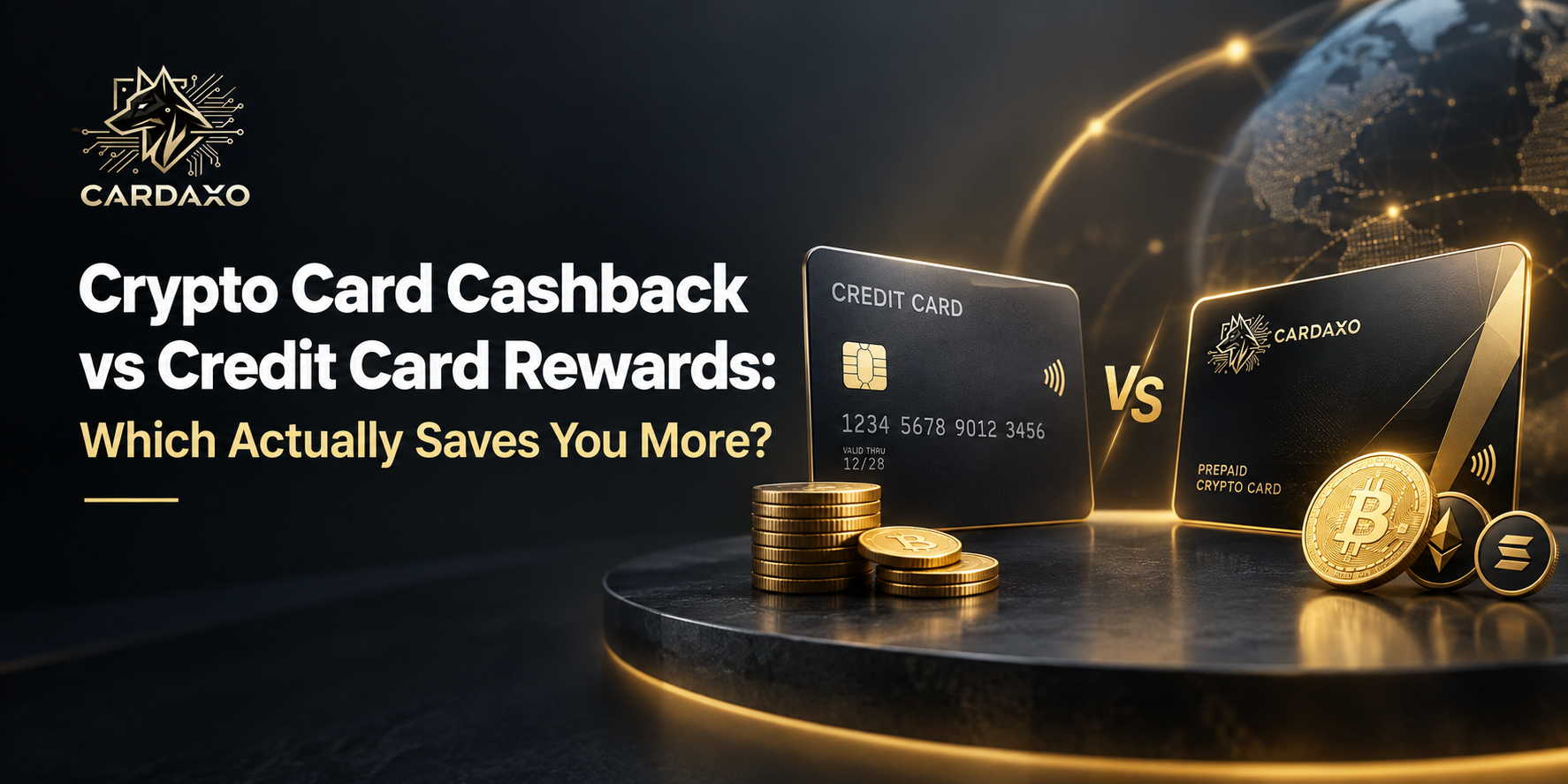
Every credit card ad promises the same thing: “Earn 2% cashback on everything.” Every crypto card ad promises something similar. Both can’t be telling the full story — and the fine print is where the real answer lives.
Here’s the part most comparisons skip: a credit card reward is a discount on money you borrowed. A prepaid crypto card reward is a discount on money you already own. That single difference changes almost everything about who actually comes out ahead — and it’s worth walking through with real numbers before you decide where your everyday spending should go.
How Credit Card Rewards Actually Work
Credit card cashback looks simple on the surface — spend, earn a percentage back — but it’s built on a business model that only works if a portion of cardholders don’t pay their balance in full every month.
A few things sit quietly behind every “2% cashback” headline:
- Interest cancels the reward fast. The average credit card APR sits well above 20% annually. Carry a balance for even one billing cycle, and the interest charged can wipe out months of accumulated cashback in a single swipe.
- Annual fees eat into the return. Premium cashback cards charging 3–5% in bonus categories often carry $95–$550 annual fees, meaning you need to spend thousands before the rewards even break even.
- Credit checks gate access. Rewards cards with the best rates typically require a good-to-excellent credit score. If you’re building credit, working internationally, or simply don’t want a hard inquiry, the best offers aren’t available to you.
- Category caps and rotating bonuses. Many cards cap 5% cashback at $1,500 in quarterly spend, after which the rate drops to 1% — a detail that rarely makes it into the marketing.
None of this means credit card rewards are a bad deal for everyone. Someone who pays their statement in full every month, tracks rotating categories, and doesn’t carry a balance can genuinely come out ahead. But that’s a narrower group of people than the ads suggest.
How Cardaxo’s Cashback Works Differently
Cardaxo is a prepaid crypto card — not a credit card. That one word, “prepaid,” changes the entire mechanism behind the reward.
When you spend with Cardaxo, you’re spending crypto you’ve already loaded onto the card. There’s no credit line, no interest rate, and no statement balance that can spiral. Every transaction earns Candy Tokens through Cardaxo’s Candy Rewards program, and — as covered in that breakdown — the rewards aren’t locked behind staking tiers or subscription fees the way many crypto cashback programs are structured.
That structural difference removes three of the biggest reward-killers in the credit card world:
- No interest risk. You can’t accidentally lose your rewards to a finance charge, because there’s no borrowing happening.
- No credit check. As explained in our guide on what makes Cardaxo a prepaid card rather than debit or credit, approval isn’t tied to a credit score — it’s tied to KYC verification and loading your own funds.
- No annual fee eating into the return. Prepaid crypto cards typically skip the fee structures that premium credit cards rely on to offset their reward payouts.
Side-by-Side: The Real Cost of Each Reward
To make this concrete, here’s a simplified comparison based on a hypothetical $1,000 in monthly spending. Actual cashback rates vary by issuer and card tier — use this as a framework for the math, not a fixed promise from either side.
| Factor | Typical Credit Card | Cardaxo (Prepaid Crypto Card) |
| Source of funds | Borrowed (credit line) | Your own preloaded crypto |
| Reward mechanism | Cashback / points | Candy Tokens |
| Interest risk | High if balance carried | None — nothing to carry |
| Annual fee | Often $0–$550 for top-tier rewards | None on the core card |
| Credit check required | Usually yes | No |
| Lockup / staking requirement | N/A | No lockup |
| Category caps | Common (e.g., 5% up to $1,500/quarter) | N/A |
| FX markup on international spend | Often 1–3% on top | Crypto-to-fiat conversion, no bank FX markup — see how crypto cards beat bank FX fees |
The takeaway isn’t that one card type is universally “better” — it’s that they’re solving different problems. A disciplined, always-pay-in-full spender with excellent credit can extract real value from a premium rewards card. Everyone else is paying, in interest or fees, for a reward they may never fully collect.
Who Actually Saves More?
Break it down by spender type:
If you carry a balance most months
Credit card rewards lose almost every time. The interest charged typically outweighs the cashback earned, sometimes several times over. A prepaid crypto card removes that risk entirely, because there’s no balance to carry.
If you spend internationally or shop cross-border often
Credit cards frequently tack on foreign transaction fees on top of a weaker exchange rate. Crypto cards built for global spending — including Cardaxo — are designed to avoid that markup, which can matter more than the headline cashback percentage.
If you’re new to credit or don’t want a hard credit inquiry
Rewards credit cards with strong cashback rates are usually reserved for good-to-excellent credit profiles. A prepaid crypto card sidesteps that gate completely, since it runs on funds you load, not funds you borrow.
If you already hold crypto and want to spend it without cashing out first
This is the scenario credit cards can’t touch at all. Every dollar spent through a crypto card is a dollar of your existing digital assets put to work, rather than a debt you’re now servicing. For a full breakdown of how that plays out day-to-day, see our Cardaxo card review covering fees, limits, and real user experience.
The Bottom Line
Credit card rewards are a bet — a bet that you’ll pay in full, stay under category caps, and get more value from points than you’d lose to fees and interest. For some people, that bet pays off. For a lot of people, it quietly doesn’t.
A prepaid crypto card removes the bet. You’re spending what you already have, earning rewards on funds that were never borrowed, and never exposed to an interest rate working against you. That’s a fundamentally simpler — and for many spenders, a fundamentally safer — way to get rewarded for spending.
If you’re already holding crypto and want to start putting it to work without the credit-card catch, see how easy it is to get started with Cardaxo — and if you know someone who’d benefit from the same no-lockup rewards, check out how the Cardaxo Referral Program lets you both earn free Candy Tokens.
Visit our instagram – Cardaxo
FAQs
Is Cardaxo a credit card?
No. Cardaxo is a prepaid crypto card. You load your own crypto onto the card and spend it directly — there’s no credit line, no borrowing, and no interest.
Do Cardaxo’s Candy Rewards expire or require staking?
No. As covered in our Candy Rewards breakdown, rewards aren’t locked behind staking tiers or subscription requirements.
Can prepaid crypto card cashback really beat credit card rewards?
It depends on your spending habits. If you carry a credit card balance or pay annual fees to access top cashback tiers, a no-interest, no-fee prepaid crypto card often nets out ahead — because there’s no debt cost quietly offsetting the reward.
(Disclaimer to include per your existing footer: Cryptocurrency assets are volatile and unregulated; ensure users understand the risks before spending.)