The digital economy is truly borderless. Today, you might purchase an online course hosted in the United States, book a hotel room in Europe through a travel portal, or pay for global software subscriptions to keep your freelance operations running.
However, the moment you check out using a legacy commercial bank account, traditional credit card, or payment gateway, an invisible thief steps in: the foreign exchange (FX) markup fee.
While global freelancers, digital nomads, and online shoppers accept these costs as an unavoidable part of doing business internationally, modern financial solutions are changing the game. By leveraging blockchain-backed rails and direct crypto-to-fiat conversion, tools like Cardaxo allow users to bypass legacy banking markups entirely.
In this comprehensive guide, we will break down how traditional foreign exchange fees quietly drain your wallet, why legacy banking structures fall short, and how switching to crypto payment cards can save you substantial money on cross-border transactions.
1. The Invisible Thief: What Are Traditional Forex Markup Fees?
When you purchase in a foreign currency using a standard domestic bank card, you expect to pay the “real” mid-market exchange rate you see on Google or financial tracking platforms. Unfortunately, traditional banks and institutional payment processors rarely give you that rate.
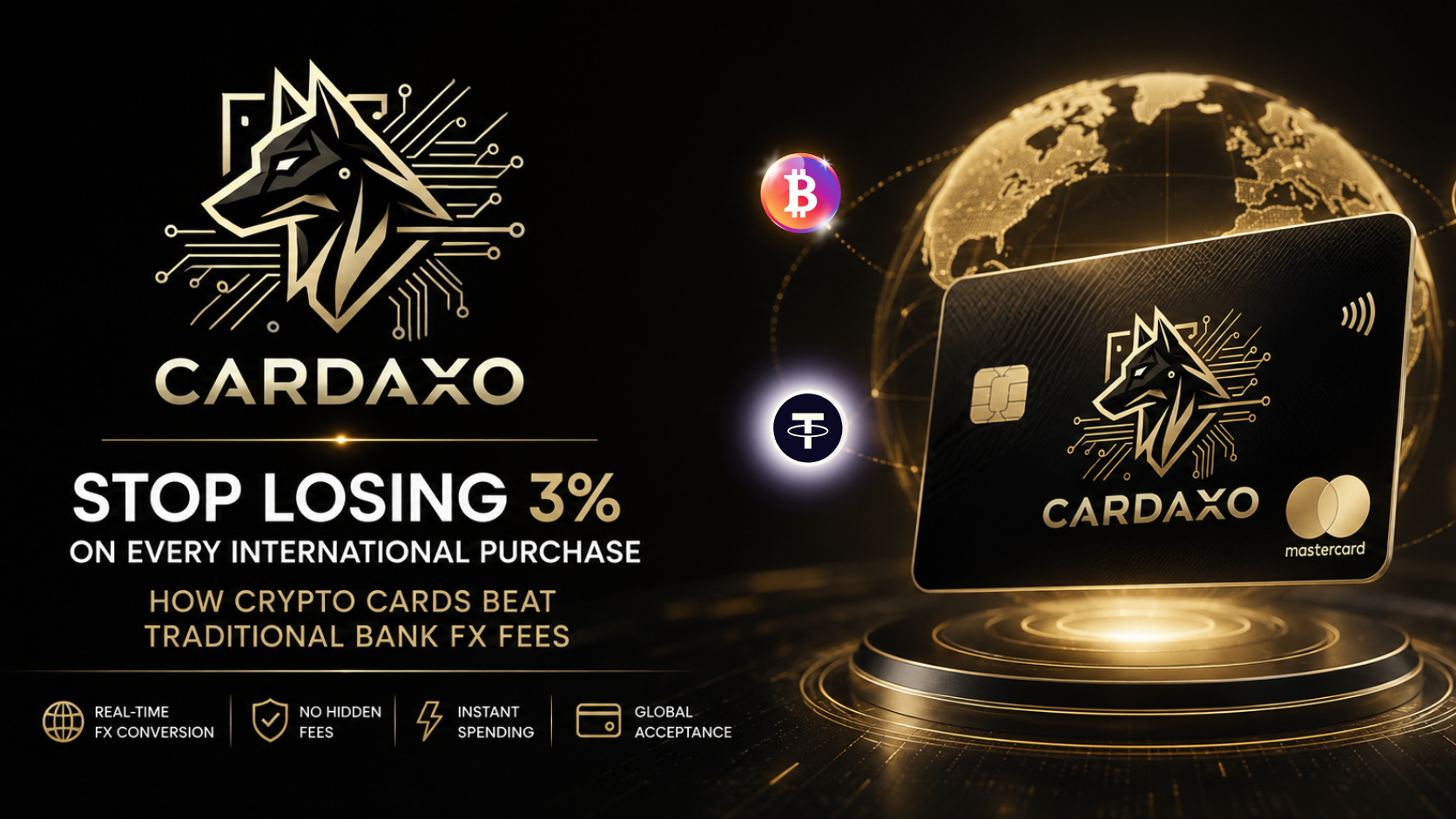
Instead, they quietly embed a 1% to 3.5% foreign exchange markup fee directly into the conversion rate.
- The Math Hurts: If you spend or process the equivalent of $2,000 a month on international travel, cross-border e-commerce, or global software tools, a standard 3% bank markup means you are losing $60 every single month—roughly $720 a year—strictly in hidden conversion overhead.
- Double Conversions: If a merchant processes your payment through an intermediate currency tier, you can get hit with Dynamic Currency Conversion (DCC) charges on top of your bank’s baseline markup, inflating your total purchase cost even further.
For global freelancers, remote teams, and crypto-native users who earn digitally, bleeding percentage points on every single cross-border payment is an unnecessary tax on productivity.
2. Why Legacy Financial Solutions and PayPal Fall Short
Beyond unannounced exchange rate spreads, legacy financial instruments introduce multiple layers of friction for international spenders:
- High Intermediary Bank Costs: Traditional cross-border wire transfers rely on legacy correspondent banking networks (like SWIFT), where multiple intermediary banks deduct fixed fees and handling charges before the funds finally reach the destination.
- Arbitrary Account Freezes: Traditional commercial banks frequently flag international checkouts or sudden multi-currency e-commerce activity as “suspicious,” resulting in declined transactions, blocked cards, and frustrating calls to customer support.
- Opaque Pricing Models: Hidden charges are rarely itemized upfront; users usually discover them only after reviewing detailed monthly statements and calculating the unexpected difference.
3. Enter Crypto Cards: The Ultimate Solution for Borderless Spending
The core innovation of web3 financial tooling isn’t just holding digital assets—it’s establishing frictionless real-world utility. Modern crypto cards bridge the gap between digital wealth and everyday commerce without leaning on legacy banking corridors.
How Real-Time Conversion Works
Instead of routing funds through multiple commercial currency exchanges and paying heavy intermediary spreads, modern crypto payment cards convert digital assets—such as stablecoins (USDT/USDC) or major tokens—into local fiat currency dynamically at the exact point of sale.
- No Middlemen: Transactions operate on efficient networks, bypassing the traditional bureaucratic layers that inflate foreign exchange costs.
- Transparent Valuation: Users maintain control over their assets and enjoy transparent conversion tracking right from their mobile application dashboards.
- Instant Availability: There is no need to wait days for wire clearances or deal with arbitrary cross-border spending limits imposed by legacy institutions.
4. How Cardaxo Eliminates Cross-Border Friction
Navigating the crypto card ecosystem requires a platform built specifically for global utility, speed, and uncompromising security. Cardaxo is designed from the ground up to solve these exact pain points as an advanced crypto card solution.
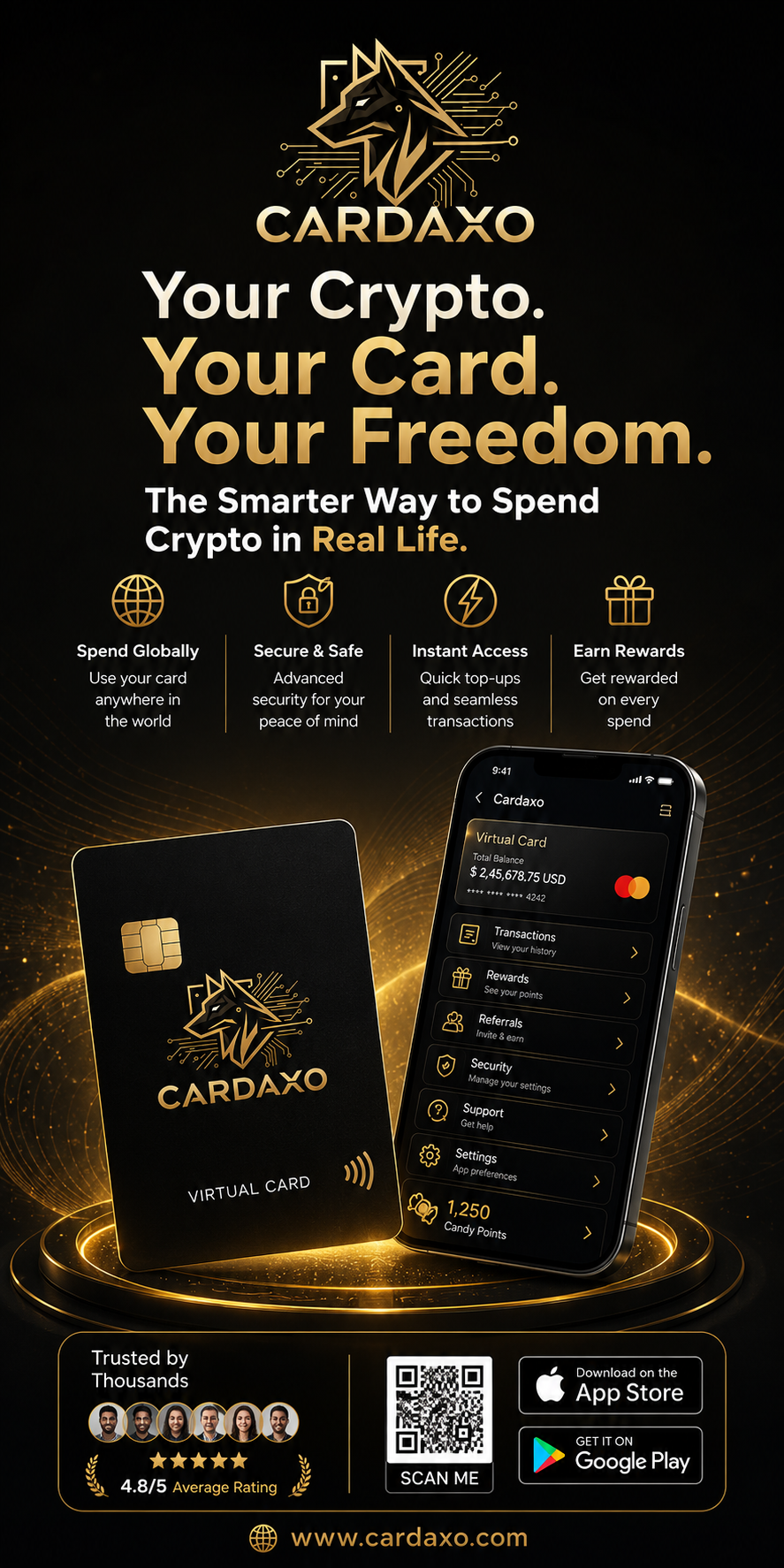
- Virtual Cards for Safe Global E-Commerce: Protect your financial privacy and bypass international markup hurdles online. Use Cardaxo’s virtual cards for secure software subscriptions, flight bookings, and global shopping.
- Physical Metal Cards for Worldwide Travel: An upcoming development. When traveling abroad, rely on sleek physical cards accepted at tens of millions of merchant locations worldwide wherever Mastercard is supported.
- Apple Pay & Google Pay Integration: Leave the physical plastic behind and make contactless international payments directly from your smartphone using your digital balance.
- Rewarding Ecosystem Integration: Turn necessary spending into opportunities. Through connected loyalty frameworks like Club Cardaxo and the Candy Rewards program, users earn perks and tokens on everyday transactions, turning regular costs into long-term savings.
Conclusion: Take Back Control of Your Cross-Border Budget
You no longer have to accept losing a portion of your hard-earned money to unannounced banking markups and hidden foreign exchange fees. By shifting to a transparent, crypto-native spending model, you gain true financial autonomy across borders.
Tired of hidden bank markups eating into your funds?
Explore the features on the Cardaxo platform, download the app to set up your virtual card, and experience borderless, transparent spending today!
Read more – How to Protect Your Crypto from P2P Scams While Funding Your Virtual Card
Frequently Asked Questions (FAQs)
Q1: What is a forex markup fee, and why do traditional banks charge it?
A: A forex markup fee is an extra percentage added on top of the baseline exchange rate when you make a transaction in a foreign currency. Traditional banks charge this to offset currency risk and generate hidden revenue from international cardholders.
Q2: Can a crypto card eliminate foreign exchange fees?
A: Yes. Modern crypto cards bypass legacy correspondent banking rails by performing real-time crypto-to-fiat conversions at checkout, allowing users to escape the steep 1% to 3.5% international markup fees charged by traditional commercial banks.
Q3: How do I use Cardaxo for international online purchases?
A: You can instantly generate a secure virtual card through the Cardaxo app, load it with your digital assets, and use it seamlessly for global e-commerce, travel bookings, and recurring SaaS subscriptions anywhere Mastercard is accepted.