Most crypto cashback cards come with fine print. Stake a large enough balance, hold it for a set period, or pay for a subscription tier — only then do the “premium” cashback rates actually kick in. It’s a familiar pattern across the crypto card market, and most users have simply accepted it as the cost of earning rewards on their spending.
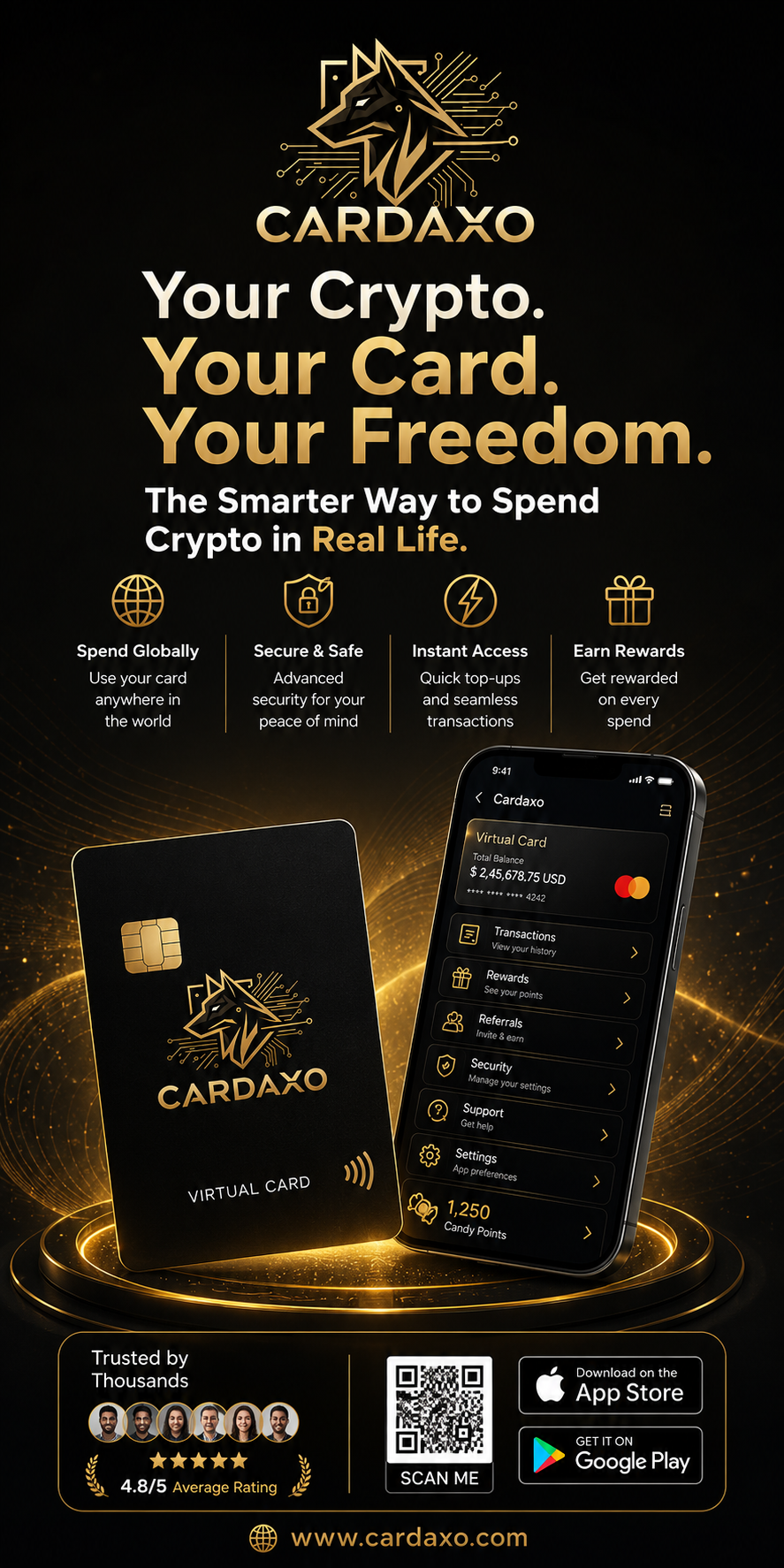
Cardaxo takes a different position. Its Candy Rewards system is built on a “no lockup, no staking” model — you swipe, you earn CANDY, and that’s it. No minimum balance requirement, no waiting period, no tiered unlocks.
That raises a fair question: is this a genuine structural difference in how crypto card rewards work, or is it just a cleaner way of describing the same underlying risk? This post breaks down the mechanism, compares it against the models most competitors use, and looks honestly at what “no lockup” actually solves — and what it doesn’t.
How Cardaxo’s Candy Rewards Actually Works
The earning loop is straightforward: every time you swipe your Cardaxo card, you earn CANDY. That CANDY lands directly in a connected CandyChain wallet — not in an internal company ledger that can be adjusted, capped, or discontinued at will.
There’s no staking requirement to access this. There’s no tiered cashback percentage sitting behind a locked token balance. You don’t need to hold a minimum amount of any token to qualify for rewards — the reward is tied to the transaction itself, not to your existing portfolio.
What makes this more interesting is that the earning loop isn’t limited to card spending. CANDY can also be earned through CandyRush gameplay and CandyBet participation — meaning the same token flows in from multiple directions across the ecosystem, not just from swiping the card. If you want the full breakdown of how the gameplay side of this economy actually functions, our deep-dive on Candy Rush’s tokenomics and P2E sustainability covers the earn-and-convert mechanics in detail.
The claim worth highlighting here is that every part of this cycle is described as on-chain and verifiable — rewards aren’t sitting in a mutable backend database, they’re recorded on-chain and land in a non-custodial wallet the user actually controls.
The Traditional Model: How Competitors Lock Rewards
To evaluate whether Cardaxo’s approach is genuinely different, it helps to understand how most of the market currently structures rewards.
The staking-gated cashback model is the most common pattern. Cashback rates — sometimes advertised as high as 8% — are only unlocked once a user stakes a large amount of the platform’s native token, or subscribes to a paid membership tier. The headline percentage looks attractive, but it’s rarely accessible to a casual user making everyday purchases.
There’s a clear business logic behind this design. Locking tokens in a staking contract reduces circulating supply and sell pressure, which helps stabilize the token’s price. It also encourages long-term holding behavior instead of instant sell-offs, and it gives the platform a more predictable pool of committed users to fund reward payouts from. In other words, lockup models aren’t arbitrary — they’re built to protect the token’s economics, often at the cost of accessibility for smaller or newer users.
The no-native-token model sits at the other end of the spectrum. Some crypto cards skip the rewards token entirely — you load crypto, it converts to fiat at checkout, and that’s the full experience. This avoids tokenomics risk altogether, but it also means there’s no earning loop, no upside beyond basic spending convenience, and nothing resembling a rewards program in the way crypto-native users have come to expect.
Cardaxo’s Candy Rewards model sits in between these two — offering an earning loop like the staking-gated model, but without the capital or holding-period barrier to entry.
Comparison Breakdown
| Category | Cardaxo (Candy Rewards) | Staking-Gated Rewards Model | No-Native-Token Model |
| Reward token | CANDY (CandyChain) | Platform-native token | None |
| Lockup requirement | None | Yes — staking or subscription tier | N/A |
| Redemption flexibility | Instant, spendable via card | Often tiered/delayed | Simple fiat conversion only |
| Fees | No annual/monthly fee | Varies, often tier-dependent | Typically low, no reward-related fees |
| KYC requirement | Yes | Varies by provider | Varies by provider |
This comparison isn’t about naming winners — it’s about showing that these are three genuinely different design philosophies, each trading off accessibility, token economics, and simplicity in different ways.
What “No Lockup” Genuinely Solves
Credit where it’s due: removing the staking requirement solves a real accessibility problem. In a staking-gated model, the users who benefit most are the ones who can already afford to lock up a large token balance — which usually means larger, more committed holders get disproportionately better rewards than someone simply using the card for groceries and subscriptions.
Cardaxo’s model removes that barrier entirely. There’s no minimum capital requirement to start earning, no punishing “unstake penalty” period if you need liquidity back quickly, and rewards are accessible the moment they’re earned. For everyday, casual spenders — which is the majority of any card’s user base — this is a meaningfully better experience than waiting to hit a staking threshold before rewards even begin accruing.
Verdict: Is This a Genuine Innovation or Just Better UX Around the Same Risk?
The honest answer is both — depending on which question you’re asking.
If the question is “does this make crypto card rewards more accessible?” — yes, unambiguously. Removing the staking barrier is a real structural improvement for everyday users who were previously locked out of meaningful rewards by capital requirements.
If the question is “does this make the underlying token more economically sound?” — no. “No lockup” is a UX and access improvement, not a tokenomics improvement. It changes who can participate easily; it doesn’t change whether the token sustains its value over time.
To put it plainly: this is a genuinely better experience for everyday spenders. But anyone treating CANDY as an investment — rather than simply a spending reward — should evaluate its fundamentals independently of the “no lockup” pitch. Ease of access and economic sustainability are two different questions, and this model only answers one of them.
Closing
The core takeaway is simple: don’t confuse ease-of-access with reduced risk. Cardaxo’s Candy Rewards genuinely removes a real barrier that most crypto card rewards programs impose — but it doesn’t, and can’t, remove the token-level questions every crypto user should be asking regardless of lockup structure.
Before treating any rewards token as a “free money” feature, it’s worth looking directly at its DEX liquidity and its actual utility sinks — where the token is spent, converted, or used beyond simply being earned. If you want to go deeper on this exact question as it applies to the CandyChain ecosystem, our upcoming post — “CANDY Tokenomics Deep-Dive: What Backs the Value Behind the Rewards?” — will unpack exactly that.
Read More – Bitcoin Hits $78,000: Why Now Is the Time to Actually Spend Your Crypto
Disclaimer: This post is for informational and educational purposes only and does not constitute financial advice. Crypto rewards tokens carry inherent market risk. Always do your own research before making financial decisions.