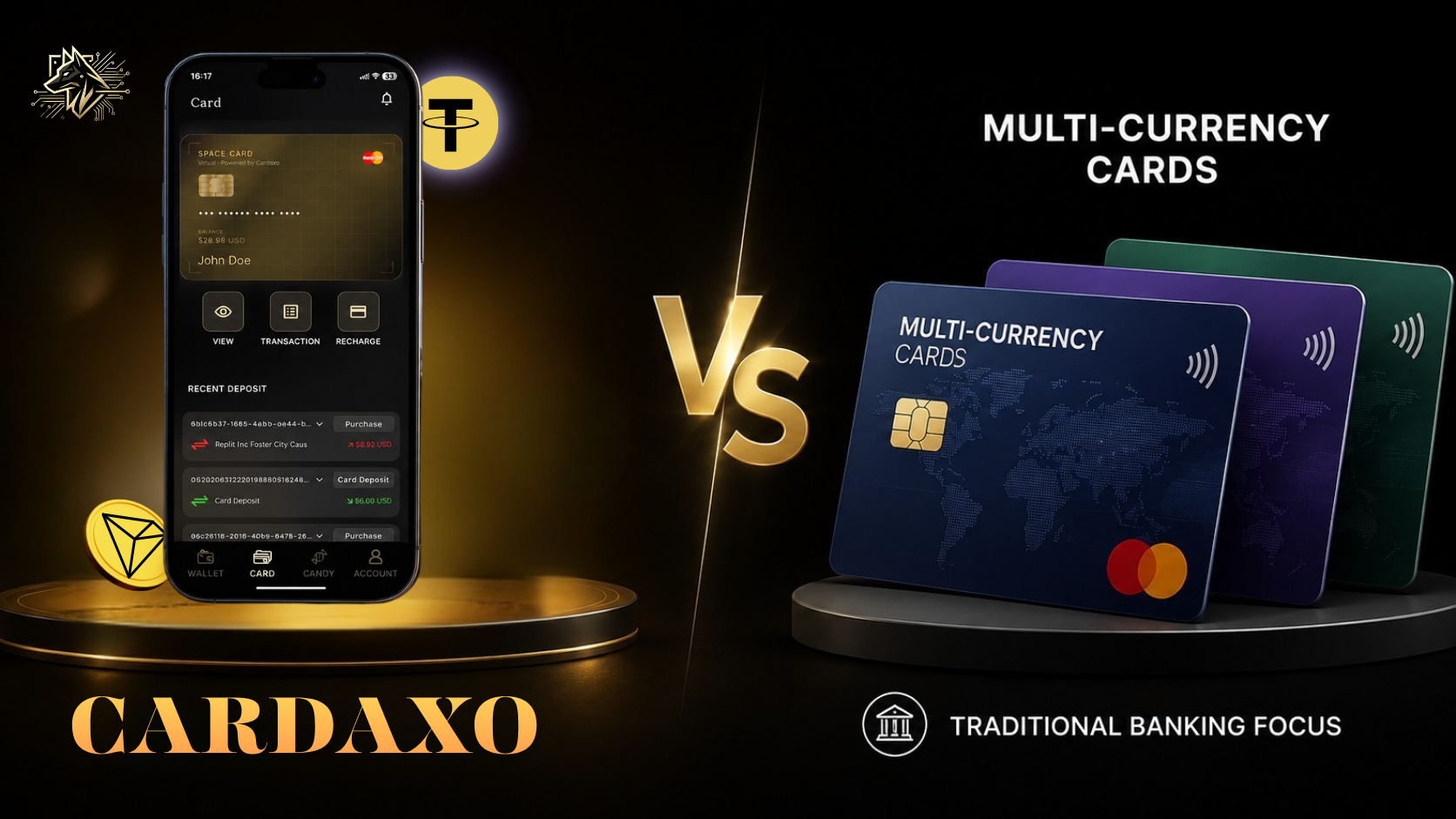
Multi-currency banking apps come up constantly in conversations about international spending — and for traditional currency management, several of them are genuinely excellent at what they do. What almost none of them share, though, is a crypto-first design. Cardaxo does. That single starting point changes almost everything else about how these products actually compare, and it’s worth understanding before assuming a general-purpose banking app is the obvious choice for spending crypto specifically.
This isn’t really about which category of product is “better” overall. It’s about which one is actually built for what you’re trying to do.
What Do Traditional Multi-Currency Banking Apps Actually Offer?
Most well-known multi-currency apps in this space are built around a broader banking product: multi-currency accounts, budgeting tools, sometimes stock or crypto investing, and card issuance layered on top. They’re typically regulated as banks or e-money institutions depending on the region they operate in.
Where crypto exists within these apps, it’s almost always a secondary feature bolted onto a much larger banking product — not the core design. For anyone who wants one app that handles everyday banking, budgeting, and occasional light crypto exposure, that breadth is a genuine strength.
What About Transfer-Focused Multi-Currency Platforms?
A separate category of apps focuses specifically on international money transfers and multi-currency holding, often built around transparency — using the mid-market exchange rate with a clearly published fee on top, rather than a markup hidden inside the rate itself.
These platforms generally don’t center crypto at all; they’re built purely around traditional currency movement and holding. For anyone whose primary need is transparent, frequent international transfers with no crypto involved, that focus is exactly the point — and a genuinely strong one.
Related Reading: What Is a Prepaid Card, and How Is It Different From Debit or Credit?
What Is Cardaxo?
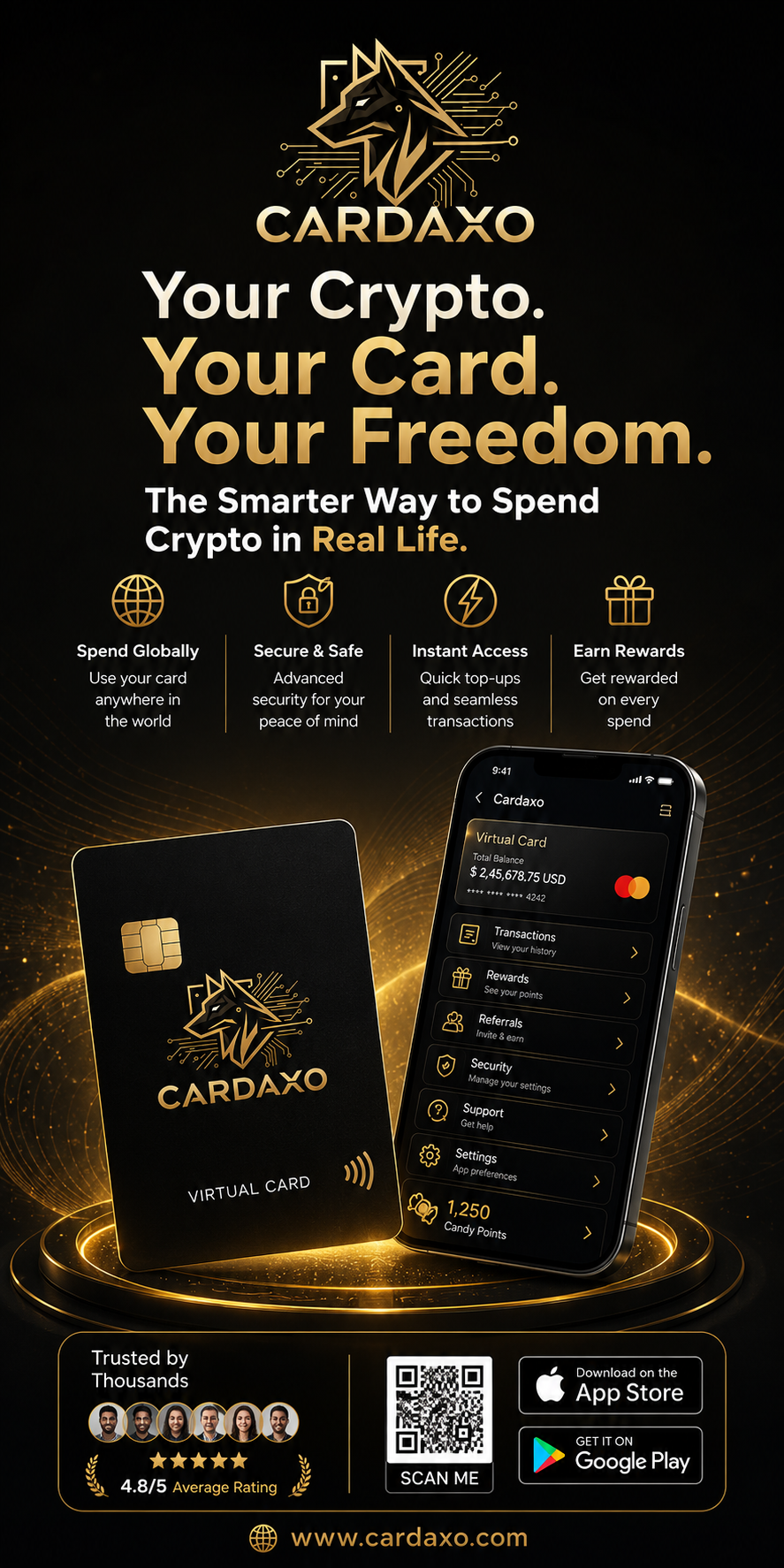
Cardaxo is a crypto-first prepaid card, integrated with Mastercard, built specifically around converting crypto holdings into everyday spending power. There’s no traditional bank account or multi-currency banking relationship required — the card is funded directly from crypto, with conversion to fiat happening in real time at the point of sale.
The structural difference from both categories above comes down to where the product starts. Traditional multi-currency apps start from “how do we manage conventional money across currencies,” with crypto — if present at all — layered on afterward. Cardaxo starts from the opposite direction: “how does someone spend crypto directly in daily life,” with everything else built around that single purpose.
Side-by-Side Comparison
Feature | Cardaxo | Traditional Banking-Style Multi-Currency App | Transfer-Focused Multi-Currency Platform |
| Core focus | Crypto-first spending | Multi-currency banking + investing | International transfers + currency holding |
| Crypto support | Native, core to the product | Secondary feature, if offered at all | Not typically a core offering |
| Bank account required | No | Yes (banking-style account) | Yes (multi-currency account) |
| Currency conversion | Real-time crypto-to-fiat at point of sale | Mid-market rate, plan-based markups beyond limits | Mid-market rate, transparent published fee |
| Rewards | CANDY Coin rewards on spend | Cashback on select plans (varies by provider) | Typically no rewards program |
| Best suited for | Crypto holders spending digital assets in daily life | Travelers/expats wanting an all-in-one banking app | Frequent international transfers, transparency-focused users |
Fee and feature specifics vary significantly across individual providers in each category — always check a specific provider’s current official pricing page before making a decision.
Currency Conversion — Where the Real Differences Show Up
Transfer-focused platforms are generally strongest on fee transparency: the mid-market exchange rate — the same one you’d find on a quick search — with a small, clearly disclosed fee, and no hidden markup buried into the rate itself. That transparency is a legitimate, well-earned reputation in that category.
Banking-style multi-currency apps also typically use the mid-market rate, but usually within plan-based limits — once a monthly allowance is exceeded, a markup can apply, with specifics varying by provider and plan tier.
Cardaxo works differently by design, since there’s no pre-converted currency balance sitting in an account to manage in the first place. Conversion happens in real time, at the point of sale, as crypto is spent directly — rather than holding a pre-converted fiat balance the way traditional multi-currency accounts do.
Who Should Actually Use Which Category
Transfer-focused platforms
fit best for anyone whose primary need is frequent, transparent international transfers and multi-currency holding, with no crypto involved at all.
Banking-style multi-currency apps
fit best for anyone who wants a single app covering everyday banking, budgeting, occasional investing, and light crypto exposure without needing separate tools for each.
Cardaxo
fits best for people who already hold crypto and want to spend it directly in daily life — groceries, subscriptions, travel — without routing it through a traditional bank account as a middle step first. For a deeper look at how that works in practice, Cardaxo has a complete guide to crypto debit and virtual cards.
FAQs
Can traditional multi-currency apps be used to spend cryptocurrency directly?
Some offer limited crypto functionality as a secondary feature, but it’s rarely the core focus of the product.
What makes Cardaxo different from a general multi-currency banking app?
Cardaxo is built specifically around spending crypto directly, without requiring a traditional bank account, while multi-currency banking apps are built around managing conventional money first, with crypto (if present) added afterward.
Which type of card has the lowest fees for spending abroad?
This depends heavily on the specific provider and your spending pattern — always compare current published fees directly from any provider before deciding.
Do I need a bank account to use Cardaxo?
No. Cardaxo is funded directly from crypto holdings rather than requiring an underlying traditional bank account.
Conclusion
Traditional multi-currency apps — both banking-style and transfer-focused — are strong, well-established tools for managing conventional money across currencies. Cardaxo fills a genuinely different need: spending crypto directly, without a bank account as the middle step. For crypto holders specifically, that distinction is usually the deciding factor — and it’s worth exploring what a crypto-first card actually looks like in practice before assuming a general-purpose banking app is the only option.