Tapping a card or phone to pay has become so automatic that almost nobody stops to ask what’s actually happening in that split second. It’s a tiny wireless handshake between two devices, completing a secure payment faster than it takes to read this sentence. Here’s a clear, plain-English breakdown of what contactless payment actually is, how the technology behind it works, and whether it’s genuinely as secure as it feels.
What Is Contactless Payment?
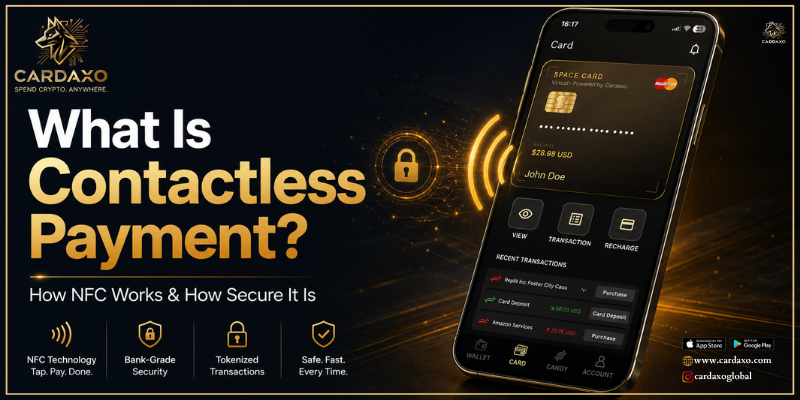
Contactless payment is a way to pay by holding a card, phone, or wearable device near a payment terminal, rather than inserting or swiping it. It’s not a single technology on its own — it’s a payment method enabled by NFC, or Near-Field Communication, which is the actual technology doing the work behind the scenes.
Contactless payments now account for a large and fast-growing share of global in-person transactions, driven partly by the sheer convenience and partly by the broader shift toward mobile wallets replacing physical cards entirely for everyday spending.
What Is NFC, and How Does It Actually Work?
NFC is a short-range wireless technology that lets two devices exchange data the moment they’re held close together — typically within a few centimeters. It’s the same category of technology used for a lot of “tap” interactions beyond payments, but payment is by far its most common use.
Here’s the sequence in plain terms:
- The payment terminal emits a small radio signal.
- When a card or phone is brought close, it responds with encrypted payment data.
- That data gets verified, and the transaction is authorized — all within about a second.
The short range isn’t a limitation — it’s a deliberate security feature. Requiring a device to be within centimeters of the terminal makes it practically impossible to intercept a transaction accidentally or from any real distance.
Is Contactless Payment Actually Secure?
This is the question most people actually have, so it’s worth addressing directly rather than brushing past it.
Tokenization is the core security mechanism at play. Modern contactless payment systems typically use dynamic transaction data and, where applicable, tokenization rather than relying on static card information — so even in the unlikely event that data was intercepted, it couldn’t be reused for another purchase.
The short-range requirement adds a second practical barrier. A would-be attacker would need to be within centimeters of your card or phone, not across a room or in a crowded space, which makes casual interception far less realistic than it sounds in theory.
Transaction limits add a third layer in many regions — contactless payments above a certain amount typically require a PIN or biometric confirmation, adding friction specifically where fraud risk would matter most.
To be fair about the trade-offs: no payment method is completely risk-free. But between tokenization, encryption, and short-range requirements, contactless payments are generally considered at least as secure as chip-and-PIN transactions, not a downgrade in exchange for convenience.
How Does Cardaxo Secure Crypto-Funded Payments?
Contactless payments are designed with multiple layers of protection, but the security of a crypto-funded payment also depends on the card and platform behind it. This is where Cardaxo adds another layer between your crypto and everyday spending.
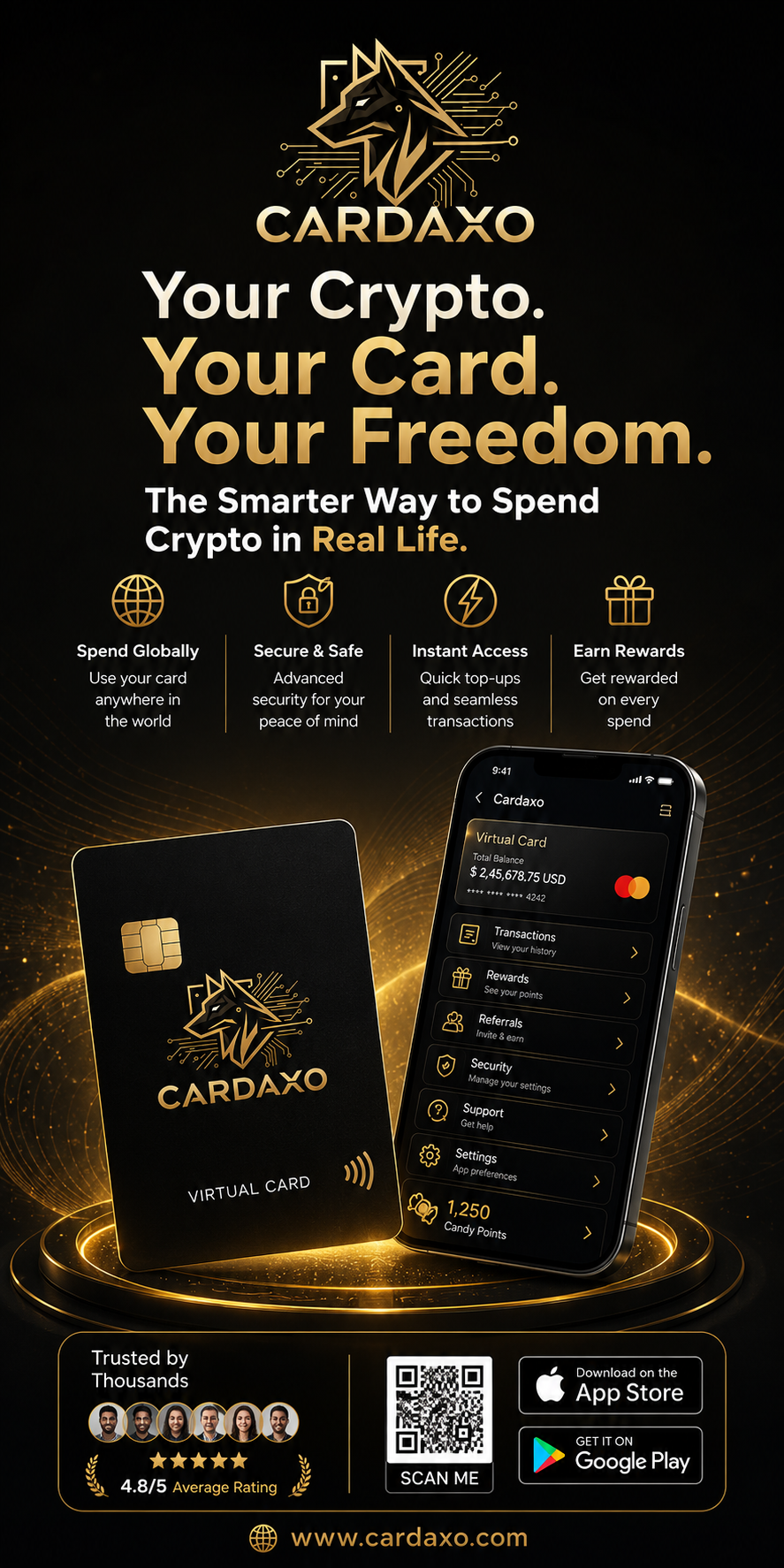
Cardaxo’s virtual crypto card is designed for secure online and offline transactions. It uses a unique card number, expiration date, and CVV rather than exposing your main crypto wallet details to merchants. The virtual card can also be connected to Apple Pay and Google Pay, allowing users to make contactless payments where supported.
Cardaxo uses Web3 wallet technology, encryption, and security protocols to protect user data and funds. Its security approach also includes KYC and identity verification as part of account onboarding.
Another important feature is the separation between crypto holdings and everyday card spending. Instead of giving a merchant direct access to your cryptocurrency wallet, Cardaxo works as a payment layer through which your crypto can be converted to fiat for the transaction. This conversion happens at the point of sale.
Contactless Payment vs Chip-and-PIN — What’s Actually Different?
Chip-and-PIN requires physically inserting a card and entering a PIN. Contactless requires only proximity, often with no PIN needed at all below a certain transaction amount.
Speed is the most obvious practical difference — contactless transactions complete noticeably faster. Security, though, is comparable in practice: both methods rely on encrypted, dynamic transaction data rather than the static card information that made older magnetic-stripe payments genuinely more vulnerable.
Read more – Cardaxo vs Multi-Currency Cards
Common Misconceptions About Contactless Payments
“Someone can just scan my card from their pocket while walking by.” In practice, this is far less feasible than it sounds. The range required is a few centimeters, and reputable cards use encrypted, single-use transaction data — making a distant, unauthorized scan impractical under real-world conditions, not just theoretically difficult.
“Contactless payments aren’t as protected as chip transactions.” As covered above, tokenization means your actual card details generally aren’t what’s being transmitted in the first place, which puts contactless on a comparable security footing with chip-and-PIN.
“There’s no limit to how much I could lose if my card is stolen.” Liability protections and spending limits vary by card issuer and region, so it’s worth checking your specific provider’s terms directly rather than assuming a blanket answer applies everywhere.
Where Contactless Payment Is Headed
Contactless is expanding well beyond physical cards — into phones, wearables, and increasingly, crypto-funded cards that run on the same tap-to-pay infrastructure. Cardaxo’s virtual and physical cards support contactless tap-to-pay, meaning the same NFC technology and tokenization principles described throughout this guide apply directly to spending crypto in the real world. For a broader look at how crypto-funded cards work end to end, Cardaxo has a complete guide to crypto debit and virtual cards.
FAQs
Is tap-to-pay safer than swiping or inserting a card?
Generally yes, or at least comparably safe. Contactless payments use tokenized, encrypted transaction data rather than the static card information involved in older swipe-based methods.
Can someone steal my card information by walking near me?
Not realistically. NFC works over only a very short range, making casual interception difficult.
Is there a limit to how much I can spend with contactless payment?
In many regions, yes — transactions above a certain amount typically require a PIN or biometric confirmation as an added security layer.
Does contactless payment work with crypto-funded cards?
Yes. Cards like Cardaxo support standard contactless tap-to-pay, using the same NFC and tokenization technology as any other contactless card.
Conclusion
Contactless payment is a genuinely secure, fast payment method, built on NFC technology, tokenization, and a short-range requirement that makes casual interception impractical rather than just unlikely. As more payment types — including crypto-funded cards — adopt the same tap-to-pay infrastructure, understanding how it actually works makes it a lot easier to trust the technology, rather than just assume it’s safe without knowing why.