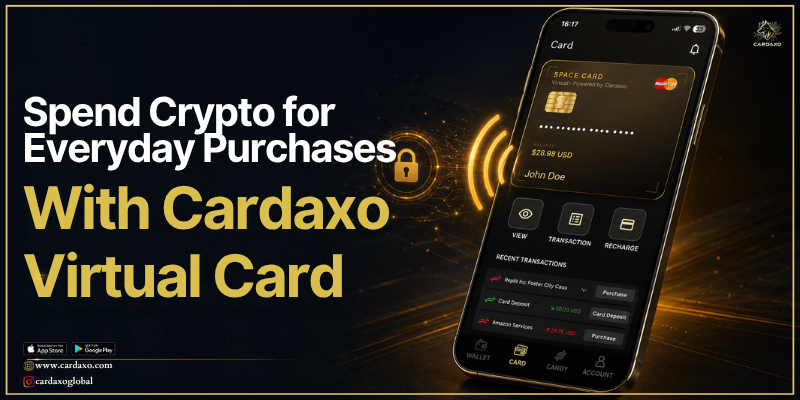
Why do we need a crypto virtual card? There has long been a frustrating paradox at the core of the digital asset industry. You can transfer hundreds of thousands of dollars across continents in under ten seconds, interact with automated liquidity protocols at midnight on a Sunday, or back early-stage networks before they list on centralized order books. Yet, when you walk into a neighborhood bakery to buy a loaf of sourdough or open an app to hail a cab, that digital wealth is suddenly useless.
For years, the standard workaround was clumsy. To pay for everyday life with digital assets, you had to transfer tokens from a self-custodial wallet to an exchange, execute a market sell order, wait for the fiat balance to clear, initiate an automated clearing house or wire transfer to a traditional bank account, and wait two to three business days before tapping a conventional debit card. By the time the cash settled, the convenience had evaporated, eaten away by multi-layer transaction fees, network gas, and exchange spreads.
The Cardaxo Virtual Card was engineered to eliminate that friction. By merging decentralized wallets with existing global payment rails, Cardaxo turns stored digital value into an immediate, everyday payment instrument.
The Evolution of Crypto Cards: From Friction to Frictionless
To appreciate why a modern virtual card matters, it helps to understand why first-generation crypto cards struggled.
Early attempts at crypto-linked payment cards were mostly prepaid debit products disguised with blockchain branding. Users manually top up a custodial balance in advance. So, if you wanted to spend $100 on groceries, you had to manually liquidate $100 worth of Bitcoin or Ether inside an exchange app an hour beforehand. The problem with this setup was that if the market shifted while you reached the checkout counter, you either had excess converted cash or not enough to cover the cart. Worse, if a platform ran into liquidity issues, user funds sat locked inside prepaid accounts with little recourse.
The virtual card revolution changed the underlying architecture. Instead of requiring days of planning and rigid top-up cycles, modern systems link payment gateways directly to real-time execution layers.
With a digital-first approach, there is no waiting weeks for a physical piece of embossed plastic to arrive in the postal mail. The card is generated instantly on a smartphone, loaded into Apple Pay or Google Wallet, and authorized against digital asset reserves right at the point of sale.
How the Cardaxo Crypto Virtual Card Works at the Checkout Counter
The magic of any payment technology is that the user shouldn’t have to think about the plumbing. When a customer uses a Cardaxo Virtual Card, the transaction on their end looks identical to any standard tap-to-pay purchase. Behind the screen, however, an automated bridge executes in milliseconds.
Consider a routine afternoon scenario:
You walk into a local café, order a pour-over coffee and a pastry, and the register shows a balance of $8.50. You double-tap your phone, bring up your Cardaxo Virtual Card in your digital wallet, and hold it near the contactless terminal.
Here is what happens in that two-second window:
- Terminal Request: The merchant’s point-of-sale terminal reads the virtual card over NFC and sends a fiat charge request for $8.50 through the global payment network like Visa or Mastercard.
- Instant Authorization & Conversion: The Cardaxo network receives the incoming authorization request. You select your preferred asset, and Cardaxo applies real-time price feeds, locking the exact fraction of tokens required to cover $8.50.
- Settlement to the Merchant: The merchant’s terminal beeps green and prints a receipt showing an ordinary $8.50 transaction. The café owner receives local fiat currency into their business bank account during standard batch settlement. They don’t need a crypto wallet, an exchange account, or any special hardware.
- On-Chain Reflection: Your Cardaxo ledger reflects the exact deduction in your asset balance without hidden slippage or surprise post-settlement reconciliations.
Whether you are paying for an annual software subscription online, buying train tickets on a morning commute, going grocery shopping, or grabbing dinner with friends, the interaction remains seamless. The merchant gets local fiat; you keep your capital active in the digital ecosystem until the very second you choose to spend it.
Real-World Use Cases: Where Cardaxo Delivers Daily Value
The real test of any payment instrument is not how it performs during a tech demo, but how naturally it fits into daily routines.
1. Daily Retail and Commuting
Consider someone who earns freelance income, staking returns, or ecosystem incentives in tokens. Traditionally, accessing that money for living expenses required regular, tedious off-ramping routines. With a Cardaxo card linked to mobile payment apps, all that same user has to do is load their crypto onto the card and pay for their daily expenses without ever touching an exchange dashboard.
2. Digital Nomadism and Cross-Border Travel
Traveling abroad often means getting hit with high foreign fees, rip-off exchange rates, and sudden bank card blocks. A crypto-backed virtual card cuts out the headache. Whether you’re booking flights, checking into hotels, or grabbing an Uber across Asia, Europe, or the Americas, one card handles it all. No bank markups or surprise declines.
3. Online Subscriptions and Digital Commerce
Buying things online from foreign sites is often a headache. Cards get declined, payments get delayed or held and most of the time simple checkouts turn into identity verification loops. Cardaxo avoids that friction. It uses standard 16-digit card details, expiration dates, and CVVs, and works seamlessly on major platforms like Amazon, Netflix, AWS, and Canva without getting blocked.
Anchoring Real Utility in the Web3 Economy
The Cardaxo Virtual Card does not exist in isolation; it functions as a crucial spending bridge within the broader Web3 landscape.
A persistent criticism of blockchain projects has been the lack of circular economies. Users earn or buy tokens, but because they cannot use those tokens for real goods, they are eventually forced to dump them on decentralized or centralized exchanges, depressing market liquidity and driving continuous sell pressure.
Connecting an everyday spending mechanism directly into Layer-1 infrastructure, such as the CandyChain ecosystem, fundamentally alters this dynamic. When users can spend their earnings on real-world items via Cardaxo, holding digital assets becomes practical. Staking rewards, prediction winnings, gaming payouts, and community incentives cease to be abstract numbers on a screen; they become groceries, plane tickets, utility payments, and fuel.
This bridge is what turns speculative tokens into functional utility assets. By giving participants a working payment card from day one, an ecosystem ensures that value stays inside the network while still providing tangible, real-world utility. Know more about it through our article Inside CandyChain’s Ecosystem — and Its Partnership With Cardaxo
Security, Privacy, and Self-Custody Safeguards
Spending digital currency in the physical world naturally raises questions about safety. Traditional debit cards share a static number printed on a piece of plastic, leaving consumers vulnerable to card skimming, database leaks, and unauthorized recurring charges.
Virtual payment cards inherently address many of these legacy flaws:
- No Physical Skimming: Because the card exists digitally inside an encrypted enclave on a smartphone, physical skimmers installed at gas station pumps or ATMs cannot clone the card data.
- Tokenized Transactions: When using digital wallets like Apple Pay or Google Pay, the actual card number is never shared with the merchant. Instead, a unique, single-use digital token is transmitted, rendering intercepted payment data useless to hackers.
- Instant Freezing and Spend Controls: Through the Cardaxo dashboard, users maintain granular control over their funds. If an online subscription looks suspicious or a phone is misplaced, the virtual card can be locked or regenerated instantly with a single tap, eliminating the headache of waiting on customer support lines to cancel and re-issue plastic cards.
- Separation of Reserves: Cardaxo is designed so that daily spending accounts remain distinct from deep long-term storage, allowing users to keep the bulk of their assets secured in cold storage while allocating only what they need for routine expenditures.
A Pragmatic Bridge to Financial Independence
True financial empowerment in crypto is not about hoarding assets indefinitely while waiting for an arbitrary price target. It is about having sovereign control over your money, earning it, storing it, and deploying it whenever and wherever you see fit.
The Cardaxo Virtual Card takes digital currency out of speculative isolation and embeds it directly into everyday reality. It bridges the gap between decentralized ledgers and traditional commerce, allowing anyone to support decentralized ecosystems without sacrificing the convenience of modern global payments.
From a quick morning coffee to an international flight booking, crypto has finally moved beyond the wallet screen and into everyday life.