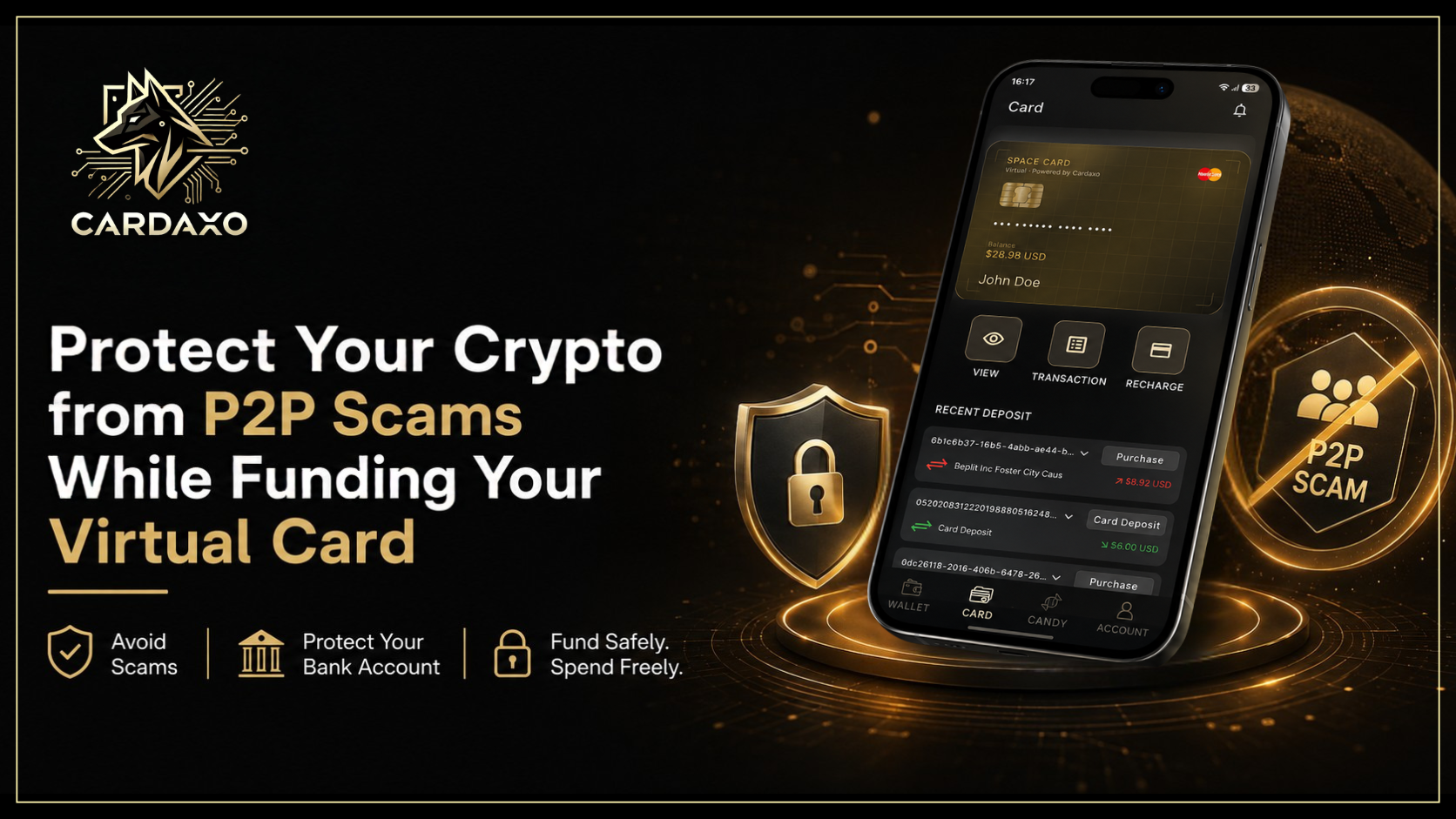
You send payment for a P2P crypto trade, and one of two things goes wrong. Either the seller takes your money and never releases the crypto — or worse, weeks later your bank account gets frozen because the funds you received were flagged as part of someone else’s fraud case entirely. If either scenario sounds familiar, or you’re trying to avoid it before it happens, you’re not overreacting. P2P trading disputes and account freezes have become a genuinely widespread problem, especially in markets like India where peer-to-peer trading is often the easiest way to get into crypto in the first place.
This guide covers how these scams actually work, why bank freezes happen even to people who did nothing wrong, and how to buy crypto — and fund a virtual card — without exposing yourself to either risk.
Why P2P Trading Has Become a Minefield
P2P trading means buying crypto directly from another individual, typically through a platform’s escrow system, with the actual payment made bank-to-bank outside the platform itself. It’s popular because it’s often the simplest on-ramp available, especially in markets where direct exchange access is limited or restricted.
That same structure is exactly what makes it risky. Because money changes hands through personal bank transfers rather than staying inside a single regulated system, it opens the door to fraud on both sides of the trade — sellers who get paid and don’t release the crypto, and buyers who unknowingly receive money that’s later traced back to someone else’s scam entirely. Two very different risks, and both are worth understanding separately.
The Most Common P2P Scam Patterns to Know
A few patterns show up repeatedly across P2P disputes:
- Fake payment proof — a buyer sends a doctored screenshot claiming payment was made, then pressures the seller to release crypto before the funds actually clear.
- Chargeback or reversal fraud — a buyer completes the trade, receives the crypto, and then reverses or disputes the original bank transfer afterward.
- Funds tied to unrelated fraud — a buyer unknowingly pays with money that’s part of a separate fraud chain, and their own account later gets frozen during an investigation despite having done nothing wrong themselves.
- Off-platform pressure — a counterparty tries to move the conversation and payment outside the platform’s official escrow system, which removes any dispute protection if something goes wrong.
Recognizing these patterns is the first real defense — most P2P fraud relies on rushing you past the moment where you’d normally pause and verify.
Read more – Stop Spending Bitcoin: Why USDT and USDC Are Better for Everyday Purchases
How Bank Account Freezes Actually Happen
This is the part people underestimate. Banks and payment processors flag accounts when funds passing through them are connected to a fraud complaint filed somewhere else in the transaction chain — even when the account holder had no involvement in that original fraud. If you receive a payment during a P2P trade and that money happens to be linked to an unrelated scam, your account can get frozen while the case is investigated, regardless of your own conduct.
That’s the real reason P2P trading needs more caution than just “don’t get scammed on the trade itself.” The bigger hidden risk is who’s actually on the other side of the transaction, and whether their funds are clean.
How to Buy Crypto Safely on P2P Platforms
If you do use P2P trading, a few habits meaningfully reduce your exposure:
- Trade only with verified counterparties who have a strong completion history on the platform.
- As a seller, never release crypto until payment is fully confirmed in your own account — a screenshot is not confirmation.
- Never agree to move payment or conversation outside the platform’s official escrow and chat system.
- Be cautious of unusually good rates — they’re often used to rush a decision before you’ve had time to verify anything.
- Keep every transaction record and chat log in case a dispute needs to be raised later.
- With a new counterparty, consider a smaller test trade before committing to a larger amount.
A Safer Alternative — Funding Your Virtual Card Without the P2P Risk
P2P isn’t the only way to get crypto onto a spendable card, and for a lot of users, it isn’t the safest one either. An alternative worth considering: buy stablecoins like USDT through more traceable, verified channels, and load them directly onto a virtual card rather than routing through a bank-to-bank P2P handoff in the first place.
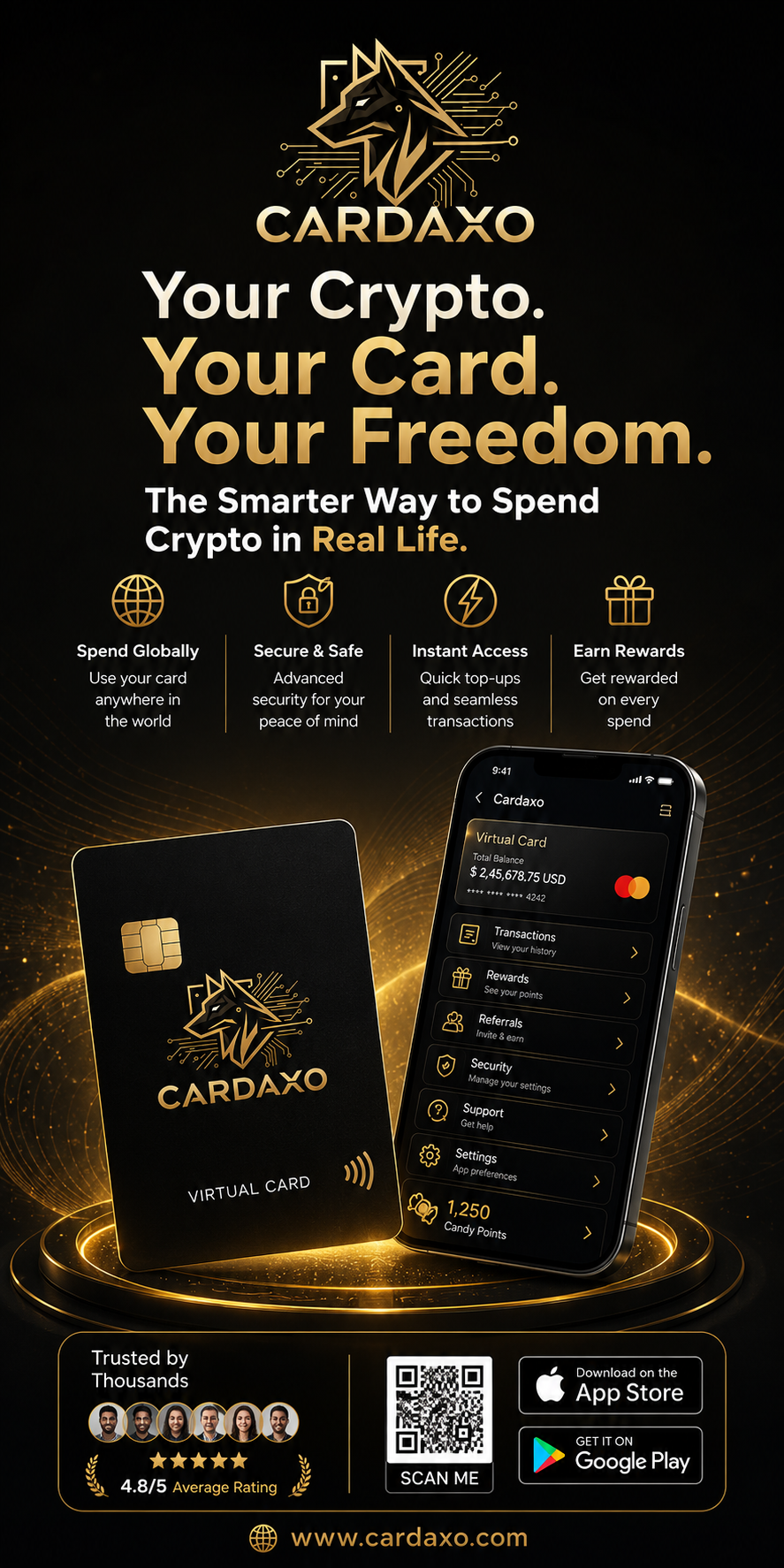
This is essentially how funding a Cardaxo virtual card works — the funding flow relies on verified transactions and identity-based onboarding rather than an anonymous bank transfer with an unverified counterparty, which removes the specific mechanism that causes P2P-related account freezes. To be clear about what that does and doesn’t mean: this describes how the funding process is structured, not a regulatory or compliance claim — it’s simply a different, more verifiable path than a personal P2P bank transfer. For a fuller breakdown of how virtual and physical crypto cards work in general, see Cardaxo’s complete guide to crypto debit and virtual cards.
A Quick Safety Checklist Before Your Next P2P Trade
- Check the counterparty’s trade history and completion rate before committing.
- Always use the platform’s escrow — never trade off-platform.
- Confirm payment has actually cleared in your account before releasing any crypto.
- Save every proof of payment and chat log related to the trade.
- For recurring funding needs, consider a verified card top-up instead of repeated P2P trades with new, unverified counterparties.
FAQs
Can my bank account really get frozen from a P2P crypto trade I didn’t do anything wrong in?
Yes. Banks can freeze accounts when funds are linked to a fraud investigation elsewhere in the chain, even if the account holder wasn’t involved in the original fraud.
What’s the safest way to buy USDT for a virtual crypto card?
Use verified, high-completion-rate counterparties on platforms with escrow protection, or fund your card directly through a verified channel rather than an unverified P2P bank transfer.
How do I know if a P2P counterparty is trustworthy?
Check their completion rate, trade history, and reviews on the platform, and be wary of anyone pushing to move payment or communication off-platform.
Is funding a card directly safer than P2P trading?
It removes the specific risk that comes from an anonymous bank-to-bank transfer with an unverified individual, since the funding flow relies on verified transactions instead.
What should I do if I think I’ve received “tainted” funds through P2P?
Contact the platform and your bank immediately, and avoid moving or spending those funds further until the situation is resolved.
Conclusion
P2P trading isn’t inherently unsafe, but it carries risk that’s easy to underestimate — not just the chance of being scammed directly, but the hidden exposure of having your own account frozen over funds you had no part in mishandling. Knowing the common scam patterns, sticking to escrow-protected trades, and verifying every counterparty goes a long way. And for anyone funding a card regularly, routing that funding through a verified channel rather than repeated P2P transfers removes a lot of this risk before it ever becomes a problem.
Ready to fund your card the safer way? Download the Cardaxo app to get started.