Living entirely on crypto sounds like the dream — subscriptions, groceries, flights, all paid straight out of your wallet, no bank in the middle. Plenty of people have tried it with Bitcoin. Almost all of them have run into the same problem: Bitcoin wasn’t built for this.
Spend $50 in BTC today, and if the price drops 5% tomorrow, you’ve effectively lost money for no reason. If it spikes instead, you just overpaid for a coffee. Bitcoin is a store of value — something you hold and watch grow. It was never designed to be a medium of exchange, and using it like one turns every purchase into an accidental bet. That’s exactly the gap stablecoins like USDT and USDC were built to close, and paired with a virtual card, they turn “spending crypto” from a volatility gamble into something you can actually budget around.
The Bitcoin Dilemma — Why BTC Fails at the Checkout Counter
The Volatility Trap
Bitcoin’s price can move meaningfully within a single day, which makes it a poor fit for anything you need to budget against. A $10 lunch today could effectively cost $12 tomorrow, or $8 — not because prices changed, but because the asset you’re paying with did. That unpredictability is fine for a long-term holding. It’s a genuine problem at checkout.
Network Fees and Speed
Bitcoin’s base layer wasn’t built for instant, high-frequency transactions. Confirmation times and network congestion can make it impractical for point-of-sale purchases or e-commerce checkouts where you need something to settle immediately, not in the next block or two.
The Mindset Shift
None of this is a knock on Bitcoin — it’s simply a different tool. Bitcoin is built to be held and allowed to grow over time. It was never meant to be the thing you swipe at a coffee shop, and treating it that way works against the reason most people hold it in the first place.
Enter Stablecoins — The Best of Both Worlds
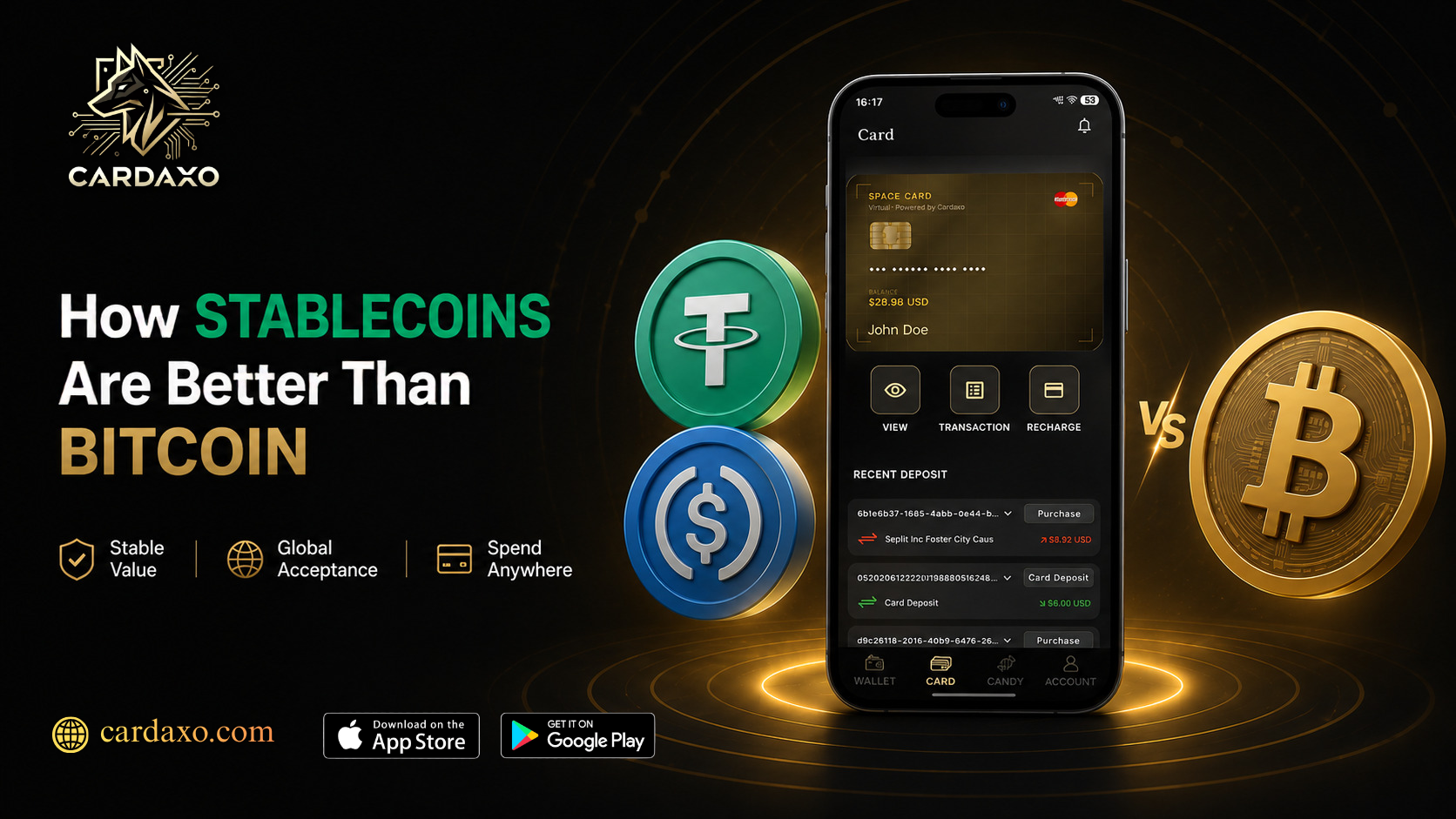
USDT and USDC are cryptocurrencies backed by fiat reserves, designed to hold a steady 1:1 value against the US Dollar. That single design choice changes everything about how usable they are day to day.
You still get the underlying advantages of crypto — speed, borderless movement, transparency — without the price swings that make budgeting with Bitcoin impractical. A $10 lunch paid in USDC costs $10 today, tomorrow, and next week. That predictability is exactly why stablecoins have become the default choice for recurring SaaS bills, everyday lifestyle spending, and anything where knowing the exact cost matters more than chasing upside.
How to Actually Use USDT and USDC for Everyday Expenses
Here’s where things historically got complicated. Even with a stable-value asset in hand, turning USDT or USDC into something you could actually spend at a normal merchant used to mean routing through centralized exchanges, waiting on bank withdrawals, and absorbing conversion fees along the way — defeating a lot of the point.
Modern crypto-fintech hybrids close that gap directly. Cardaxo’s virtual and physical Mastercard-integrated cards convert USDT and USDC to local fiat in real time, at the exact moment of purchase — no manual off-ramping, no separate withdrawal step. That conversion also works with Apple Pay and Google Pay for tap-to-pay purchases, and the card itself is usable anywhere Mastercard is accepted — from everyday e-commerce and travel bookings to groceries at a local store. For a broader breakdown of how virtual and physical crypto cards work in general, Cardaxo has a complete guide to crypto debit and virtual cards.
Practical Use Cases for Stablecoin Card Holders
Freelancers and remote workers getting paid in USDT or USDC no longer have to wait on local bank wire clearing to actually use that income — it converts and is spent instantly through a linked card.
SaaS and digital subscriptions — tools like AI platforms, hosting services, or streaming apps — can be paid for cleanly with a stablecoin-funded virtual card, without juggling a separate crypto-to-fiat step every billing cycle.
Travel and global shopping benefit especially: stablecoins act as digital dollars usable worldwide, which helps sidestep the foreign exchange markup fees that traditional cards often add on international purchases.
Read more – What the $100M Coldcard Hack Teaches Crypto Card Users About Wallet Security
Conclusion
Bitcoin and stablecoins solve two different problems, and mixing them up is where most people run into trouble. Holding Bitcoin long-term is a legitimate strategy. Spending it on a $10 lunch is not — the volatility works against you either way the price moves. Stablecoins like USDT and USDC exist precisely for the spending side of that equation: predictable value, instant usability, and none of the “did I just overpay or underpay” guesswork that comes with spending an asset that moves 5% in a day.
Ready to put your stablecoins to work? Download the Cardaxo app, generate your virtual card, link it to Apple or Google Pay, and start spending USDT and USDC globally without the conversion headache.