There are dozens of crypto cards competing for attention right now, and most comparison articles just list features at you without actually helping you decide. What you need instead is a short, practical checklist — something you can run through in five minutes before hitting “apply.”
Before signing up for any crypto card, including one like Cardaxo, it’s worth working through a few core questions. This article lays out exactly what to check, and how a card like Cardaxo stacks up against each point.
Disclaimer: This article is for educational purposes only and isn’t financial advice. Fees, features, and regional availability vary by provider and can change over time.
1. Check the Card Model: Prepaid vs Debit
Start here, because this decides how your money actually moves. A debit-style card stays linked to your wallet or exchange, converting crypto in real time at checkout. A prepaid card flips that order — you load funds first, then spend from that balance.
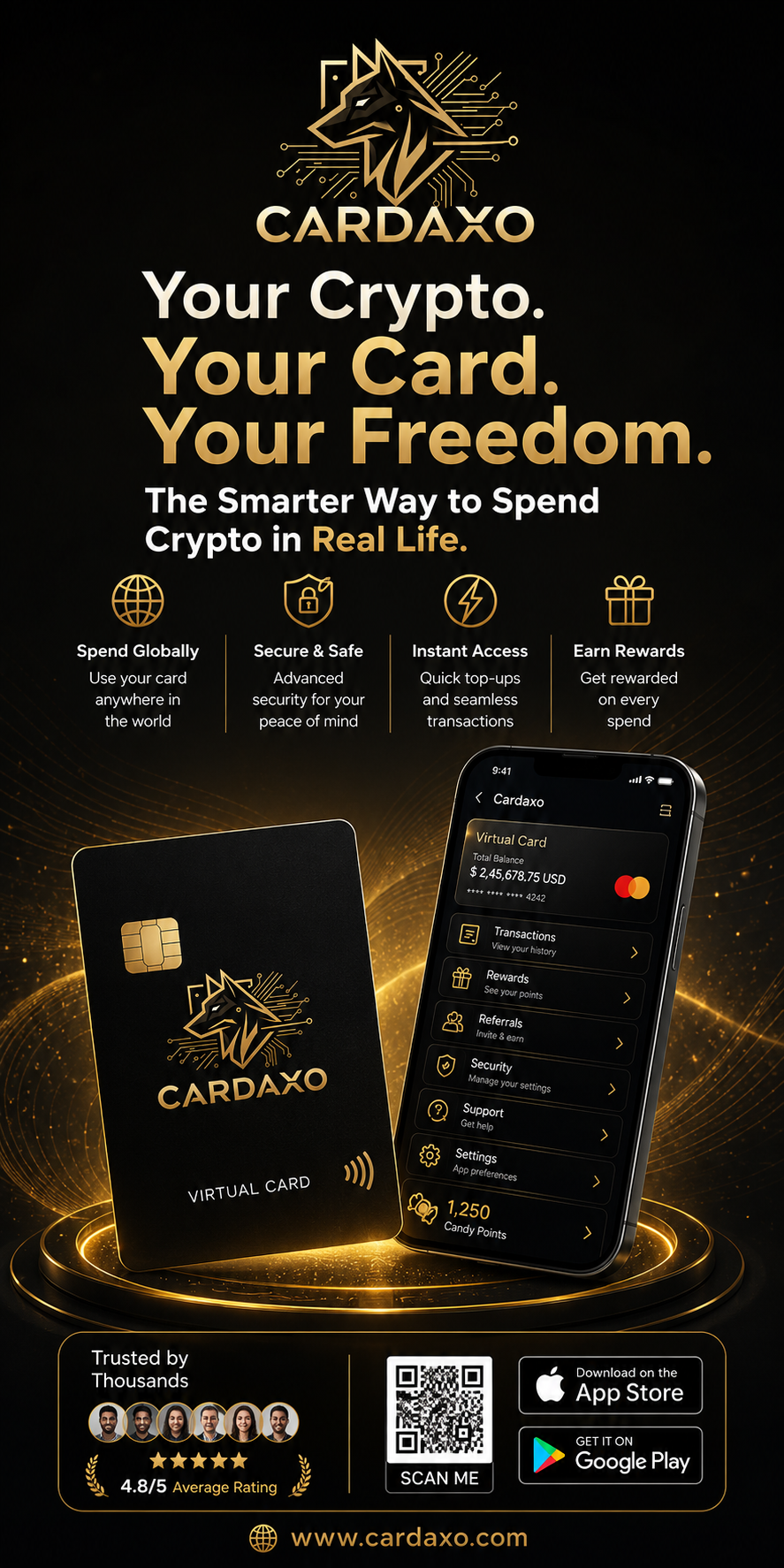
Cardaxo runs on the prepaid model: a virtual Mastercard where you load only what you plan to spend, while your larger holdings stay separate in your wallet. That structure alone changes how much risk you’re exposed to on any given day.
2. Confirm Which Assets and Conversions It Supports
Not every card supports the same list of cryptocurrencies, and some require you to convert through a separate exchange before loading the card at all. That extra step adds friction and fees you might not expect.
With Cardaxo, major holdings convert into a spendable balance without needing to route through a separate exchange first — one less step between you and your money.
3. Read the Fee Structure Closely
This is where most people get caught off guard. Loading fees, conversion fees, ATM withdrawal fees, and even inactivity fees can quietly eat into your balance — and they vary significantly from one provider to the next.
Cardaxo keeps this structure visible upfront, which matters a lot when you’re comparing it against competitors that bury charges in the fine print.
4. Look at Global Acceptance and Network
A card is only as useful as the places that accept it. Check whether it runs on Visa, Mastercard, or a smaller proprietary network, since that directly determines how many merchants and ATMs will actually take it.
Cardaxo runs on Mastercard, which means access to a very large global merchant network — a meaningful factor if you travel or shop across regions.
5. Understand Where Your Crypto Actually Sits
Before applying, ask a basic but important question: where does your crypto live before you spend it? Fully custodial models, wallet-linked models, and hybrid models each carry different security trade-offs.
Cardaxo uses a KYC-based onboarding process with encrypted wallet infrastructure, and because it’s prepaid, only the amount you’ve loaded is ever exposed through the card itself — the rest stays untouched.
6. Compare Rewards and Cashback Structures
Rewards programs sound similar on the surface, but the fine print differs a lot. Some require staking a specific token, others gate better rates behind subscription tiers or high monthly spending thresholds.
Cardaxo’s Candy Rewards program ties cashback to the CandyChain ecosystem, without forcing users through complicated staking requirements just to unlock basic benefits. Every swipe gets you up to 2% CANDY as cashback. Live on-chain.
7. Check Mobile Wallet and App Support
How the card fits into your phone matters more than most people expect. Apple Pay and Google Pay support, instant virtual issuance, and a clean app experience all affect whether you’ll actually use the card day to day.
Cardaxo issues a virtual card instantly once KYC is complete, with mobile wallet compatibility built in from the start — no waiting on a physical card to arrive before you can start spending.
8. Check Regional Availability and Onboarding Speed
Some crypto cards are locked to specific regions, or require a lengthy verification process before you can even use them. That delay matters if you need a working card sooner rather than later.
Cardaxo’s KYC-to-issuance flow is built to move quickly, which is useful if you’d rather not wait days just to get a physical card mailed to you.
Related Reading – What Is a Merchant Category Code (MCC)?
The Full Checklist, Recapped
Before you apply for any crypto card, run through these:
- Prepaid or debit model — which fits your risk tolerance?
- Which assets and stablecoins does it actually support?
- What’s the real fee structure — loading, conversion, ATM, inactivity?
- Visa, Mastercard, or niche network — how wide is acceptance?
- Where does your crypto sit before it’s spent?
- What are the actual rewards terms, not just the headline number?
- Does it support Apple Pay/Google Pay, and how fast is issuance?
- Is it available in your region, and how long does onboarding take?
Conclusion
There’s no single “best” crypto card — there’s only the one that fits your spending habits, risk tolerance, and region. Running through this checklist before you apply saves you from discovering hidden fees or coverage gaps after you’ve already signed up.
If you’re looking for a card that checks these boxes with a prepaid, security-first structure, Cardaxo is worth putting on your shortlist.
This article is for educational purposes only and is not financial advice. Fees, features, and regional availability vary by provider and are subject to change.