Most crypto losses don’t happen because the blockchain gets hacked — the blockchain itself is extremely secure. They happen because of how people store their private keys. Wallet choice is one of the biggest, least-understood security decisions any crypto user makes, and getting it wrong is one of the most common (and avoidable) ways people lose funds.
Here’s a clear breakdown of hot wallets vs. cold wallets, when to use each, and how this decision connects to something as simple as spending your crypto day to day.
What Is a Hot Wallet?
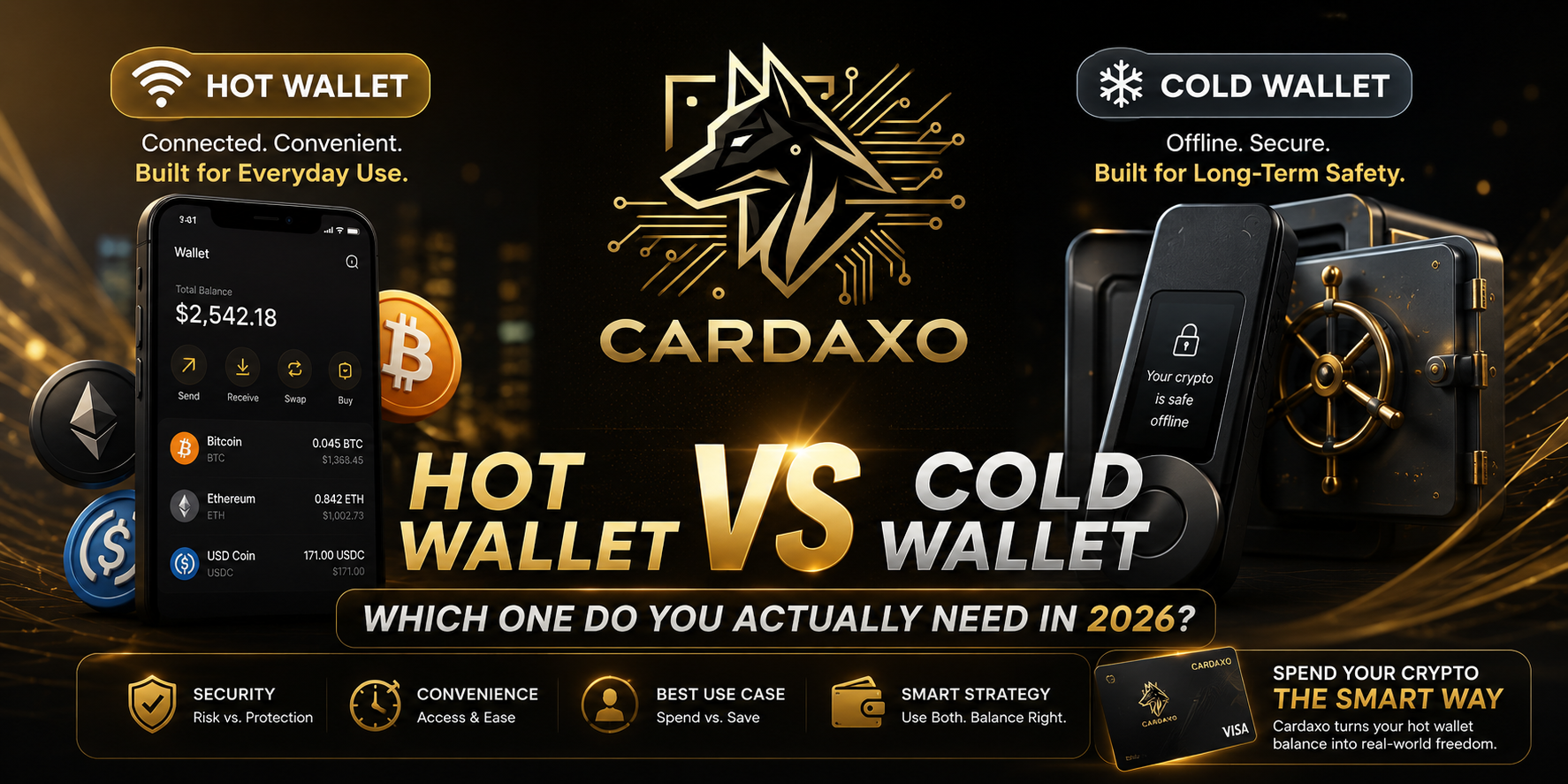
A hot wallet is any crypto wallet that stays connected to the internet — exchange accounts, mobile apps, and browser extensions like MetaMask all fall into this category.
Pros: Fast, convenient access. Ideal for frequent transactions, trading, or spending.
Cons: Because it’s always online, it’s more exposed to hacking attempts, phishing, and malware than offline storage (Gemini).
What Is a Cold Wallet?
A cold wallet keeps your private keys completely offline — typically through a hardware device (like a Ledger or Trezor) or, less commonly today, a paper wallet.
Pros: Since your keys never touch the internet, cold wallets are essentially immune to remote hacking attempts.
Cons: Less convenient for frequent spending, and you take on responsibility for physical security — losing or damaging the device without a backup can mean losing access permanently (BitGo).
Hot vs. Cold: Side-by-Side Comparison
| Hot Wallet | Cold Wallet | |
|---|---|---|
| Connection | Always online | Offline |
| Security | Lower — exposed to online threats | Higher — immune to remote hacks |
| Convenience | High — instant access | Lower — extra steps required |
| Best for | Frequent spending/trading | Long-term storage |
| Main risk | Hacking, phishing | Physical loss/damage |
Which One Do You Actually Need?
This isn’t really an either/or decision. Most experienced crypto users split their holdings: a cold wallet for the bulk of their long-term holdings, and a hot wallet for the smaller amount they actually plan to use or spend soon.
The most common mistake is the opposite — keeping large amounts sitting in a “hot” exchange balance indefinitely, out of convenience, rather than moving the bulk of it into cold storage once it’s not needed for active use.
How This Connects to Everyday Crypto Spending
This is where a crypto card fits naturally into the picture. A card like Cardaxo works with the “hot” portion of your holdings — the amount you’ve deliberately set aside to spend — while the rest of your holdings can stay safely in cold storage, untouched.
Think of it the same way you’d think about a physical wallet: you don’t carry your entire savings account balance around with you day to day. You carry what you plan to spend, and keep the rest secured elsewhere. The same principle applies here — load only what you intend to spend onto your card, and leave long-term holdings in cold storage. For a closer look at how that spending side works in practice, see our guide on how to use a crypto card for everyday expenses.
Common Wallet Security Mistakes to Avoid
- Storing seed phrases digitally — screenshots, cloud notes, or emails are all searchable and hackable. Write them down physically instead.
- Using one wallet for everything — mixing daily spending and long-term storage in the same wallet increases your exposure unnecessarily.
- Downloading wallet apps from unofficial sources — always verify you’re using the official app or extension before entering any wallet details.
FAQs
Is a hot wallet safe for small amounts?
Yes — hot wallets are reasonably safe for amounts you’re actively using or spending, since the convenience trade-off makes sense for smaller, active balances. They’re not recommended for storing significant long-term holdings.
Can a cold wallet be hacked?
Cold wallets are effectively immune to remote hacking since they’re never connected to the internet. The main risks instead are physical — theft, loss, or damage to the device itself.
What happens if I lose my hardware wallet?
As long as you have your recovery/seed phrase backed up securely, you can restore your funds onto a new device. Without that backup, losing the device typically means losing access permanently.
Should beginners start with a hot or cold wallet?
Most beginners start with a hot wallet (often an exchange or mobile app) simply because it’s easier to use while learning. As holdings grow, moving the bulk of funds into cold storage becomes a sensible next step.
Conclusion
The hot wallet vs. cold wallet question isn’t really about picking a winner — it’s about using each one for what it’s built for. Cold storage protects what you’re holding long-term; a hot wallet (and a crypto card on top of it) gives you fast, practical access to what you actually plan to spend. If you’re comparing which card fits that hot-wallet spending role best, our complete crypto card guide breaks down what to look for.
Ready to turn your hot wallet balance into real-world spending power? Download Cardaxo and spend your crypto anywhere Mastercard is accepted — instantly, securely, and only with the amount you choose to load.
Read more – CLARITY Act Explained: How It Could Impact the Crypto Market and Crypto Cards
This article is for informational purposes only and does not constitute financial advice.