Digital payments have evolved rapidly over the past few years. From scanning QR codes to tapping cards, people today expect payments to be instant, secure, and effortless.
Two popular methods often compared are UPI and crypto cards. While one is known for simplicity and low-cost transactions, the other is gaining attention for global access and crypto-powered flexibility.
But here’s where the confusion begins
- Which one is cheaper?
- Which one is faster in real-world use?
- Can crypto cards actually replace traditional payment methods?
Understanding the difference between these two is important — especially if you want to choose the right payment method for your needs.
In this guide, we’ll break down everything you need to know about crypto card vs UPI, including fees, speed, usability, and real-life scenarios.
Crypto Card vs UPI – Which One Should You Use?
Digital payments have completely transformed how people spend money. From scanning QR codes to tapping cards, transactions today are faster, simpler, and more accessible than ever before.
Among the many payment methods available, two options stand out: UPI and crypto cards.
UPI has become extremely popular for instant bank transfers in supported regions, while crypto cards are gaining attention as a global solution for spending digital assets.
This leads to a common question:
Which is better — crypto cards or UPI?
In this guide, we’ll compare both payment methods across fees, speed, convenience, global usability, and real-world use cases — so you can decide which one fits your needs in 2026.
What is UPI?
UPI (Unified Payments Interface) is a real-time payment system developed by the National Payments Corporation of India.
It allows users to instantly transfer money between bank accounts using mobile apps, without needing detailed bank information for every transaction.
Key Features of UPI
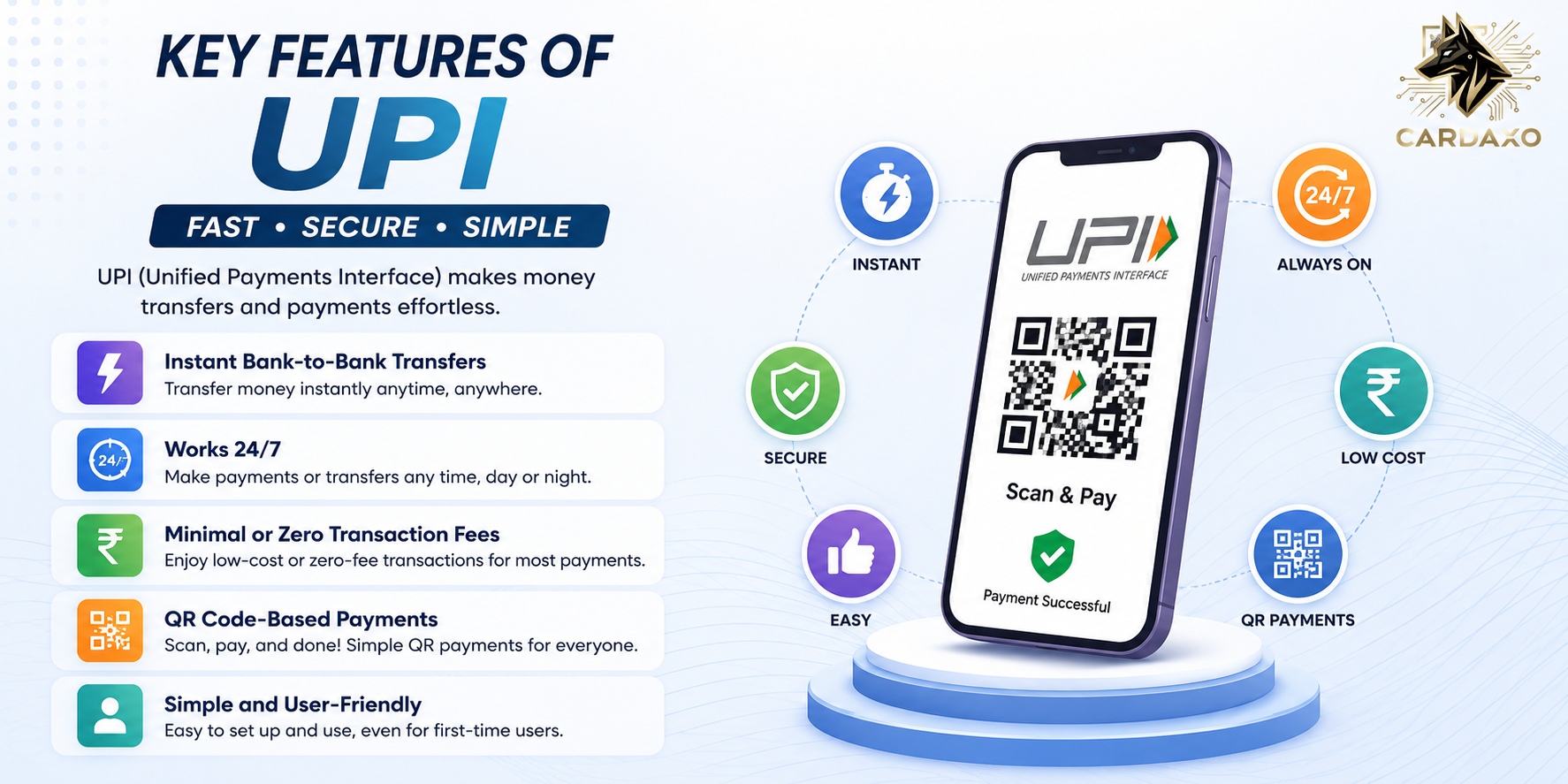
- Instant bank-to-bank transfers
- Works 24/7
- Minimal or zero transaction fees
- QR code-based payments
- Simple and user-friendly
While UPI is widely used in certain regions, its availability is still limited globally.
What is a Crypto Card?
A crypto card works like a debit or prepaid card, but instead of using a bank balance, it uses cryptocurrency stored in your wallet.
When you make a payment:
- Your crypto is converted into fiat currency in real time
- The merchant receives standard currency
Key Features of Crypto Cards
- Spend crypto like regular money
- Works globally (online and offline)
- Supports multiple cryptocurrencies
- Offers rewards or cashback in some cases
- Available as physical and virtual cards
Crypto cards are designed for users who want borderless payments without relying entirely on traditional banking systems.
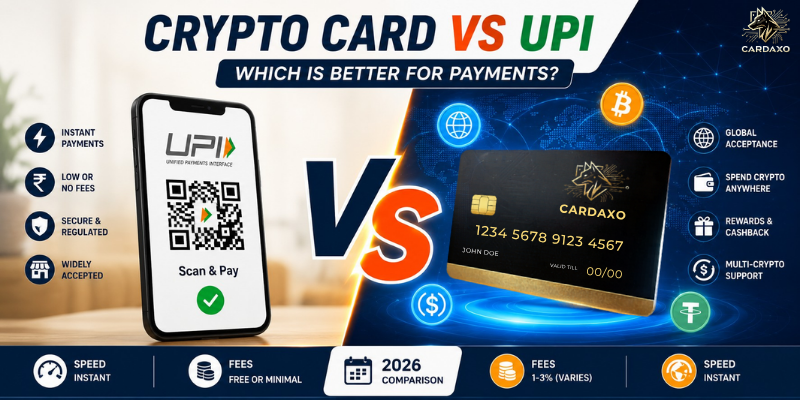
Crypto Card vs UPI (Direct Comparison)
Here’s a clear comparison:
|
Feature |
UPI |
Crypto Card |
|
Speed |
Instant |
Instant |
|
Fees |
Free or minimal |
1–3% (varies) |
|
Acceptance |
Region-specific |
Global |
|
Currency |
Fiat only |
Crypto + Fiat |
|
Regulation |
Fully regulated locally |
Varies by country |
|
Cashback |
Rare |
Often available |
|
Ease of Use |
Very easy |
Moderate |
Key takeaway:
UPI is ideal for local payments, while crypto cards offer global flexibility.
Fees Comparison: Which Is More Cost-Effective?
Cost plays a major role when choosing a payment method.
UPI Fees
UPI is known for its affordability:
- Most transactions are free
- No conversion charges
- Minimal processing costs
This makes UPI one of the most cost-effective payment systems available.
Crypto Card Charges
Crypto cards typically include:
- Conversion fees (crypto → fiat)
- Foreign exchange (FX) fees
- Processing or network charges
On average, users may pay 1% to 3% per transaction.
This is why many people compare crypto card vs UPI charges before deciding.
Verdict on Fees
- UPI = cheapest option
- Crypto card = more flexibility, but higher cost
Speed & Convenience
Both payment methods are fast, but convenience depends on usage.
UPI
- Instant QR-based payments
- No need for cards
- Works seamlessly in supported regions
Crypto Card
- Tap or swipe like a debit card
- Works worldwide
- Requires crypto balance
UPI is better for everyday local use
Crypto cards are better for global payments
Where Crypto Cards Win
Crypto cards have several advantages:
Global Payments
Crypto cards work internationally, making them ideal for:
- Travel
- Cross-border transactions
- Global shopping
Online Services
You can easily pay for:
- Subscriptions
- Digital tools
- International platforms
Rewards & Cashback
Some crypto cards offer:
- Crypto rewards
- Cashback on spending
- Loyalty benefits
Where UPI Wins
UPI remains extremely powerful for local use.
Local Acceptance
UPI is widely accepted within supported ecosystems.
Zero Cost
Perfect for:
- Daily transactions
- Small payments
Ease of Use
No need to manage:
- Wallets
- Crypto volatility
- Conversions
Regulatory Stability
UPI operates within well-defined financial systems, making it reliable and secure.
Legal Status & Regulations
UPI
- Fully regulated within supported regions
- Backed by local financial authorities
- Stable and widely trusted
Crypto Cards
- Operate in a regulatory grey area in many countries
- Rules vary depending on jurisdiction
- Availability depends on providers
Always check local regulations before using crypto cards.
Real-Life Use Cases
Everyday Local Payment
- Best option: UPI
- Reason: Fast, free, widely accepted
International Purchase
- Best option: Crypto card
- Reason: Works globally
Freelance Income Spending
- Best option: Crypto card
- Reason: Direct crypto usage
Daily Expenses
- Best option: UPI
- Reason: No fees
UPI vs Crypto Payments: Can Crypto Replace UPI?
Short answer: Not yet.
UPI is deeply integrated into local financial ecosystems, while crypto cards are still evolving.
Crypto cards are better seen as a complementary payment method, not a replacement.
Is Crypto Card Better Than UPI?
It depends on your needs.
Choose UPI if:
- You need local payments
- You want zero-cost transactions
- You prefer simplicity
Choose Crypto Card if:
- You need global payment access
- You use cryptocurrency
- You want flexibility
The smartest approach is to use both.
Final Verdict
- For local, everyday payments → UPI is better
- For global, crypto-based payments → Crypto card is better
Instead of choosing one, combine both for maximum efficiency.
FAQs
Is a crypto card legal?
It depends on your country. In many regions, crypto cards operate under evolving regulations.
Can a crypto card replace UPI?
No. UPI is still the preferred method for local payments.
Which is cheaper – UPI or a crypto card?
UPI is cheaper because it is mostly free.
Can I use a crypto card everywhere?
Crypto cards work globally, but acceptance depends on the card network and local rules.
Explore Crypto Payments with Cardaxo
Looking to explore crypto-powered payments?
Cardaxo helps you access modern payment solutions that combine flexibility, speed, and global usability.
Discover:
- Crypto card features
- Pricing options
- Latest payment innovations
Final Thought
The future of payments isn’t about choosing one method — it’s about using the right tool for the right situation.
UPI simplifies local transactions. Crypto cards unlock global possibilities.
And if you understand both, you’re already ahead.
For more – How to Use Crypto During Global Crises for Safe & Instant Payments
How Expatriates Use Crypto Cards to Send Money Home Cheaply