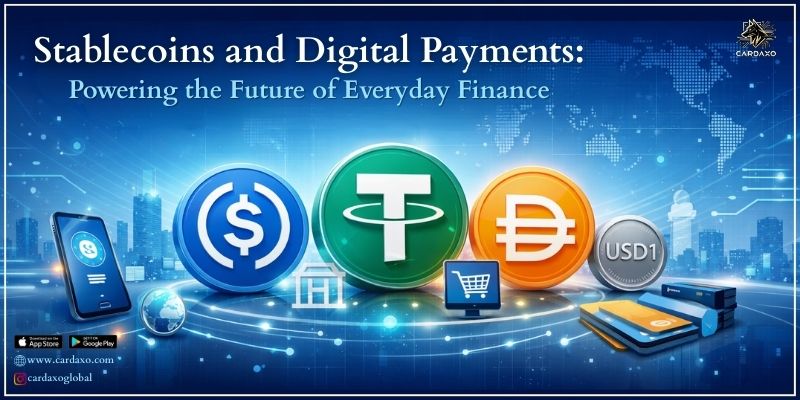
Stablecoins have become the foundation of the otherwise volatile cryptocurrency market. Stablecoins, which are frequently tied to fiat currencies like the US dollar or the euro, provide confidence and price stability.
Today, stablecoin news can be seen highlighting how they are changing the way digital payments are being stored and cross-border payments are transferred.
In a landscape where global payments still rely on a slower and more expensive financial ecosystem, stablecoins emerge as a transparent alternative. Tokens like USDT, USDC, and USD1, etc., allow users to move finances without delay and with reduced reliance on traditional intermediaries like banks and forex.
This feature of being independent of mediators, while offering stability of price, makes stablecoin cross-border payments a powerful measure. Moving ahead in this article, we will understand in detail how stablecoin is shaping the future of global money.
How Stablecoins are Transforming Digital Payments
The problem: The structure of digital payments was designed decades ago and has been modified as per the requirements. However, it still depends on legacy infrastructure, being prominently dominated by cards and banks.
The solution: Stablecoins bring change to this traditional structure. They allow peer-to-peer transfers directly on the blockchain. These stablecoin payments are transparent and cost-efficient, making them an attractive alternative for users.
The impact: Stablecoins bring faster remittances, which are immensely effective for the regions where banking is limited. They visibly reduce settlement time and transaction fees while improving cash flow. Freelancers, exporters, and other global teams prefer stablecoin payments as they offer predictable value without currency conversion issues. This efficiency is why stablecoin cross-border payments are becoming an important topic in global financial discussions.
Stablecoins as a Payment Layer for Crypto Cards
Stablecoins are incorporated in crypto debit and credit cards like Cardaxo, simplifying everyday spending. These crypto cards allow users to make payments through their stablecoins like USDT and USD1 at millions of merchants worldwide. While Web3 technology offered by them keeps transactions safe, the complication of conversions happens in the background. This leaves users experience simplified process of using their digital currency with ease.
This real-world usage model of stablecoins has shifted the narrative, where crypto cards and their apps provide a familiar user experience. This has elevated stablecoin’s status from a digital dollar meant for storage to a practical tool for daily transactions.
The Role of Regulation and Trust
Stablecoins now process trillions in annual on-chain volume globally. Their continuous expansion has led to the topic of regulation needing to be addressed. Governments and the financial sector are closely monitoring their issuance, collateralization, and audit processes. There are also coming up with rules to put in place to ensure that these assets will be fully reserve-backed, transparent, and will adhere to anti-money laundering regulations.
This regulatory clarity has encouraged institutional adoption. Banks, fintech platforms, and payment firms have started accepting stablecoins as a legitimate digital payment tool. This has resulted in having more partnership opportunities between crypto and traditional assets.
Looking ahead, stablecoins are moving fast to become pioneer of digital payments. With the improvement of blockchain scalability and user-friendly wallets, they will soon become as simple as using traditional money via a mobile banking app. Their global acceptance and transparency position them with a bright future.
FAQ’s
Why are stablecoins important for digital payments?
Stablecoins are usually pegged with a fiat currency, hence bringing stability in a volatile crypto ecosystem. Further, they combine blockchain speed with this stability, which makes them an ideal choice for everyday payments, online purchases, and international transfers.
How do stablecoin cross-border payments work?
Stablecoin cross border payments allow users to send money globally on a blockchain network, which is transparent and gets settled within seconds. The speed of transaction happens because the funds move directly between wallets, reducing their settlement time, fees, and dependency on banks and foreign exchanges.
Can stablecoins be used with crypto debit and credit cards?
Many crypto cards, like Cardaxo, allow users to spend stablecoins like USDT and USD1 at merchants accepting Mastercard payments, online and offline.
How are stablecoins regulated?
Stablecoin regulation varies differently in differnt country. Governments are understanding the leverage stablecoins may have in the absence of a strong regulatory hold. To overcome it, they are introducing rules around reserves, audits, and anti-money laundering to ensure stability and consumer protection.